
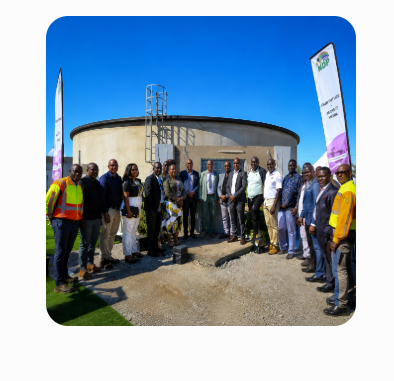
More than 1,300 KwaZulu-Natal households are gaining access to clean, safe and sustainable water following the opening of a new scheme designed to strengthen health, dignity and local development.
KwaZulu-Natal Premier Thamsanqa Ntuli, together with King Cetshwayo District Municipality Mayor Zephania Dlamini, officially opened the KwaHlokohloko Water Scheme in the uMlalazi Local Municipality.
The project is expected to benefit 1,385 households in KwaHlokohloko, expanding access to an essential service that directly influences the everyday wellbeing of families and communities.
Beyond providing clean drinking water, reliable water infrastructure can support sanitation, household food production, schools, healthcare facilities and local economic activity.
Ntuli said access to water should be understood not simply as the provision of a basic resource, but as a fundamental human right.
“Access to water is central to human dignity, household wellbeing, food security, education, healthcare and local economic activity,” Ntuli said.
The project was delivered through collaboration between government, municipalities, engineers and communities, bringing different stakeholders together around a shared service-delivery objective.
For the households being connected, the impact can be felt across multiple areas of daily life.
Reliable access to water can reduce the burden associated with securing water for household use, while creating better conditions for hygiene, food preparation and other basic needs. At community level, dependable water supplies can support communal gardens, schools, health facilities and economic activity.
Ntuli said the project demonstrated what could be achieved when communities and different spheres of government work together to address essential service-delivery needs.
“As taps begin to fill and flow with water, they also carry hope for a better future, healthier families, fruitful communal gardens, thriving schools and functional health facilities,” the Premier said.
The KwaHlokohloko Water Scheme also demonstrates the broader social value of investment in basic infrastructure.
While pipes, reservoirs and other physical infrastructure make water delivery possible, the ultimate impact is measured through the people and institutions that depend on that infrastructure every day.
For families, reliable water supports household wellbeing and dignity. For schools and healthcare facilities, it contributes to environments capable of functioning effectively. For communities, water can support food production and opportunities for local economic development.
Protecting that investment will now become an important part of sustaining its impact.
Ntuli urged residents to take care of the new water infrastructure and report people found vandalising or tampering with it.
He warned that vandalism of public infrastructure undermines service delivery and can ultimately deprive the same communities the infrastructure was built to support.
The Premier said protecting these assets should therefore be regarded as a shared responsibility between government and communities.
The opening of the scheme forms part of the KwaZulu-Natal Provincial Government’s commitment to expanding equitable access to basic services across both rural and urban areas.
For KwaHlokohloko, that commitment now translates into something tangible: 1,385 households gaining access to a resource that can improve health, strengthen dignity and create better conditions for families and their wider community.
