
Global governance leaders will gather in Johannesburg to tackle one of democracy’s less visible challenges: building public institutions capable of turning political decisions into services people experience.
The New South Institute (NSI) will host Statecraft 2026, an International Congress on Democracy and Public Institutions, in Johannesburg from 22 to 23 September 2026.
The two-day congress will bring together policymakers, senior public servants, academics, institutional leaders and governance practitioners from South Africa and around the world to examine how governments can build stronger and more accountable institutions.
At the centre of the gathering is a simple argument: democracy cannot function effectively through elections and political leadership alone.
It also depends on the public institutions responsible for delivering schools, healthcare, infrastructure, municipal services and sound management of public finances.
“Democracy does not survive on elections alone,” said Ivor Chipkin, Director of the New South Institute.
“It depends on something far less visible: the machinery that transforms political decisions into functioning schools, reliable infrastructure, effective healthcare, responsive municipalities, sound public finances and institutions that citizens can trust. That machinery is public administration.”
This thinking has shaped the congress theme, The Machinery of Democracy, and its central message: “Public administration is only boring… until it fails.”
Statecraft 2026 comes as South Africa continues efforts to reform its public service and strengthen the institutions responsible for implementing government policy.
Following the passage of the Public Service Amendment Act 9 of 2025, NSI argues that the national conversation must increasingly move from explaining why reform is necessary towards determining how meaningful reform can actually be implemented.
For more than a decade, the institute has examined why public institutions succeed or fail and what is required to strengthen government capability.
Statecraft 2026 is intended to move that work into a practical international forum.
Rather than following a conventional conference model dominated by prepared speeches and presentations, organisers are positioning Statecraft as a working congress focused on implementation.
International practitioners, public officials, researchers and institutional leaders will compare experiences from different countries and examine the obstacles that can prevent public-sector reforms from succeeding.
Discussions will explore the appointment of senior public officials, independence of the civil service, governance of state-owned enterprises, leadership development, urban governance, public participation, political accountability and the future of democratic institutions.
The programme will include participants from South Africa, South Korea, Chile, Slovakia, Nigeria, Tanzania and Serbia, providing opportunities to compare how different democracies have approached institutional reform.
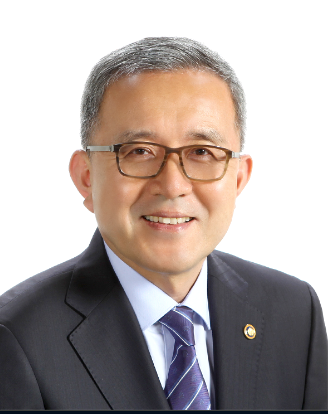
Among the keynote speakers is Professor Pan Suk Kim, who is internationally recognised for his involvement in the design and implementation of South Korea’s civil-service reforms.
His participation will give delegates an opportunity to examine practical lessons from South Korea’s public-sector reform journey and consider which experiences may be relevant to other democratic systems.
The international approach is important because institutional weakness is not unique to South Africa.
Countries across different political and economic environments continue to grapple with questions about how public officials are appointed, how institutions are protected from inappropriate political interference and how governments maintain the skills required to deliver effectively.
For citizens, these questions ultimately have practical consequences.
The effectiveness of public administration can determine whether infrastructure is maintained, municipalities function, healthcare services reach communities and public resources are managed responsibly.
NSI’s work on public-service reform focuses particularly on insulating public officials from inappropriate political interference while developing accountable administrations staffed on merit.
Statecraft 2026 will extend that conversation by bringing together people who have worked directly on institutional reform in different parts of the world.
The congress also reflects a broader shift in discussions about democracy.
While elections determine who receives the mandate to govern, capable public institutions determine whether those political commitments can ultimately be translated into results.
That is the principle behind the name Statecraft: the practice of governing well.
For NSI, strengthening democracy therefore means looking beyond political contests and focusing on the institutions, leadership and administrative systems responsible for making government work.
Statecraft 2026 will put those systems at the centre of the conversation — and ask what governments can learn from one another about turning reform into institutions that deliver for citizens.
