
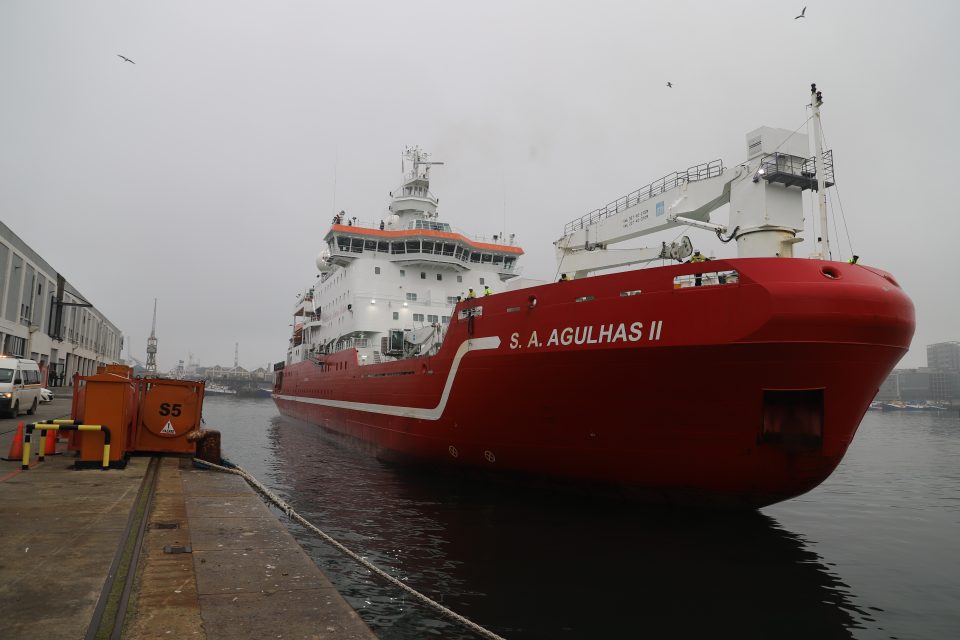
The 2025/26 Marion Island overwintering team has safely returned to South Africa following a six-week delay affecting the SA Agulhas II relief voyage.
Minister of Forestry, Fisheries and the Environment Willie Aucamp welcomed the team home on Wednesday after ordering an urgent evacuation prioritising the safety and wellbeing of personnel stationed at the remote scientific base.
The delays were linked to the unavailability of specialised fuel products required to produce polar diesel used to operate the Marion Island base in extreme sub-Antarctic temperatures.
“While the temporary closure of the base is unfortunate following the emergency evacuation, my team and I felt it important to prioritise the safety and well-being of our people,” said Minister Aucamp.
“That is why I ordered the evacuation and it was worth it.”
The SA Agulhas II vessel was authorised to operate in “Ice Mode”, allowing maximum sailing speed to reach the island as quickly as possible.
The Department of Forestry, Fisheries and the Environment confirmed that efforts are now under way to restore operations at the base, including repairs, restocking food and fuel supplies and deploying a full support team back to Marion Island.
Officials hope operations can resume within two to three weeks, depending on weather conditions required for helicopter operations.
During the team’s return ceremony, Minister Aucamp and Director-General Nomfundo Tshabalala thanked the overwintering personnel and their families for their patience and commitment during the delays.
Certificates were handed to all members of the team in recognition of their service.
“Now that we have secured the wellbeing of our people, we will work to restart the systems at the base, undertake repairs, restock the food and fuel supplies, while also initiating various interventions to mitigate against future risks during all voyages to the three South African remote scientific bases,” said Aucamp.
The Department also confirmed it has secured an 18-month supply of polar diesel to strengthen operational contingency measures for future voyages.
South Africa’s Antarctic and sub-Antarctic research programme plays an important role in climate science, biodiversity conservation, oceanographic research and global environmental monitoring.
Minister Aucamp reaffirmed the country’s commitment to maintaining long-term scientific research operations in the region despite the logistical challenges experienced during the latest voyage.
