
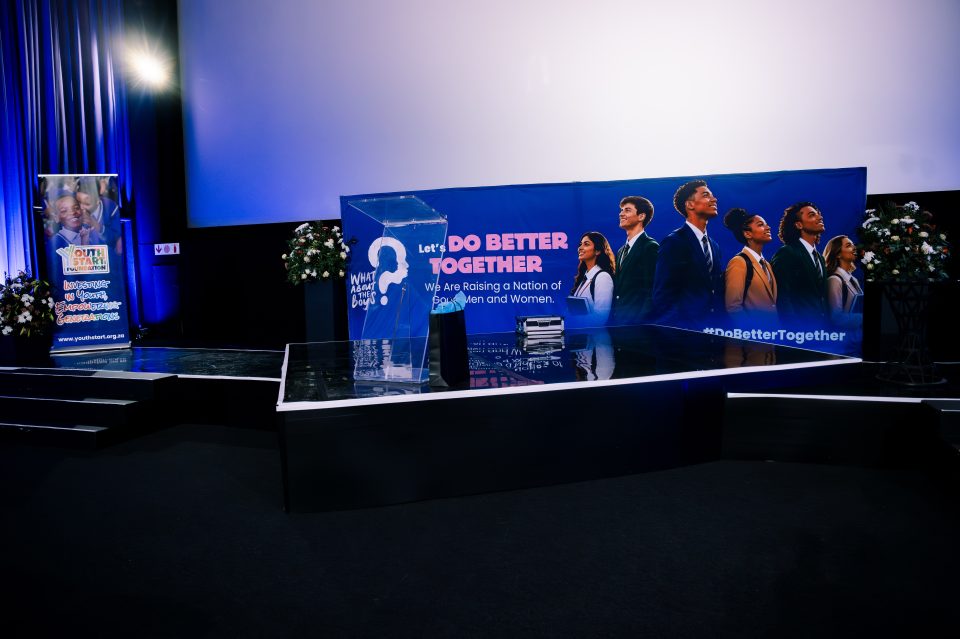
Primestars and The YouthStart Foundation have launched What About The Boys 2, expanding a youth-focused intervention aimed at preventing Gender-Based Violence in South Africa.
Primestars and The YouthStart Foundation officially premiered What About The Boys 2 (WATB2) in Johannesburg, positioning the initiative as one of South Africa’s growing preventative interventions against Gender-Based Violence (GBV).
The launch took place at Ster-Kinekor at The Zone in Rosebank and brought together government leaders, educators, corporates, civil society organisations and young people around a shared message: prevention must begin before violence occurs.
A major announcement during the event came from Deputy Minister of Higher Education and Training Buti Manamela, who confirmed a new partnership that will expand the programme into universities, TVET colleges and post-school youth spaces.
The first iteration of the programme, launched in 2022, reached more than 60,000 boys across over 180 schools nationally, supported by over 400 mentors and 35 partners. Independent evaluations recorded a 67% reduction in bullying and measurable shifts away from violence-supportive attitudes.
The second phase now introduces a dual-gender intervention model that brings boys and girls together to challenge harmful gender norms collectively.
Speaking at the premiere, Primestars Executive Chairman Martin Sweet said GBV often begins long before physical violence occurs.
“Where does Gender-Based Violence begin? Not in a courtroom or a police station. It begins much earlier,” he said.
Sweet added that society continues to reinforce harmful expectations around masculinity and silence, creating environments where violence becomes normalised.
Primestars CEO Nkosinathi Moshoana said the organisation’s long-term focus is helping young people transition “from learning to earning,” while also strengthening emotional wellbeing and relationship-building skills.
YouthStart Foundation General Manager Refiloe Mohale said empowering boys without simultaneously empowering girls would limit long-term change.
“You cannot ask a boy to unlearn dominance if a girl is still taught to accept it,” she said.
Government representatives at the event described the programme as a practical example of prevention-focused action under South Africa’s National Strategic Plan on Gender-Based Violence and Femicide.
The cinema-based learning model remains central to the programme, using film and shared experiences to promote empathy, accountability and emotional intelligence among young people.
National implementation of the 2026 programme begins on International Day of the Boy Child on 16 May 2026.
