
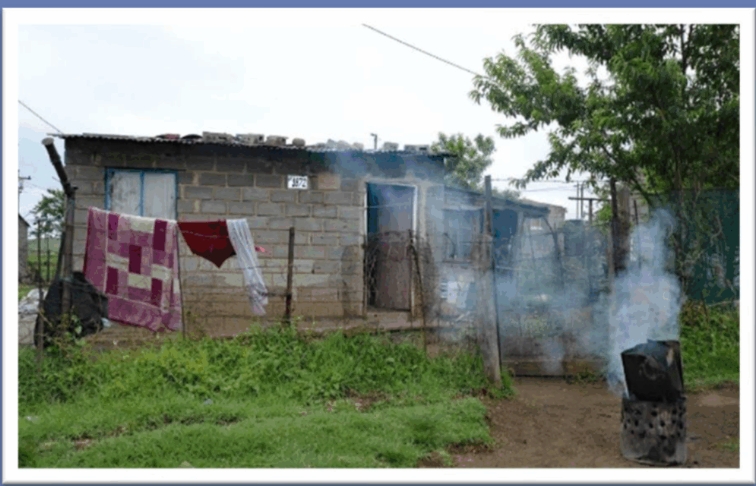
Science is taking a more central role in South Africa’s response to air pollution, as experts push for practical, community-focused solutions that move beyond traditional industrial regulation.
The Academy of Science of South Africa (ASSAf) hosted a high-level workshop in Pretoria on 22 April 2026, bringing together policymakers, researchers, industry, and community stakeholders to explore science-driven approaches to improving air quality.
At the centre of discussions was the launch of ASSAf’s new policy brief: “Air Quality Offsets as an Instrument for Air Quality Management in South Africa.”
Shifting focus: from emissions to exposure
While progress has been made in reducing industrial emissions, air pollution continues to disproportionately affect low-income and densely populated communities — where air quality often exceeds national safety standards.
The policy brief introduces air quality offsets as a complementary, cost-effective solution. Unlike traditional approaches, these interventions focus on reducing pollution where people are most exposed — particularly within households.
Key interventions include:
Transitioning households from coal and wood to cleaner energy sources
Improving thermal efficiency in homes
Reducing waste burning through improved waste management
This marks a shift toward a people-centred model, targeting the lived reality of air pollution rather than emissions alone.
Beyond environment: health, jobs, and equity
ASSAf’s findings highlight that air quality offsets can deliver measurable improvements in ambient air quality when supported by strong scientific monitoring.
More broadly, they contribute to:
Improved public health outcomes
Job creation through local implementation
Environmental sustainability
Progress toward South Africa’s Just Energy Transition
Crucially, the approach also addresses underlying issues such as energy poverty and inequality.
Collaboration as a core requirement
The policy brief emphasises that success depends on coordinated action across sectors — government, industry, research institutions, and communities.
It also highlights the importance of community participation, noting that long-term impact requires local ownership, context-specific solutions, and inclusive decision-making.
Policy priorities moving forward
ASSAf calls for a more structured national framework to support implementation, including:
A national standard for air quality offsets
Greater focus on indoor air quality
Expansion beyond designated priority areas
Stronger monitoring, transparency, and accountability
Deeper cross-sector collaboration
Science as a policy lever
The workshop reinforced a broader shift in South Africa’s policy landscape — where science is not just informing decisions, but actively shaping scalable, real-world interventions.
Air quality offsets, if implemented effectively, offer a pathway to improve conditions in the country’s most vulnerable communities while aligning environmental goals with social and economic outcomes.
