
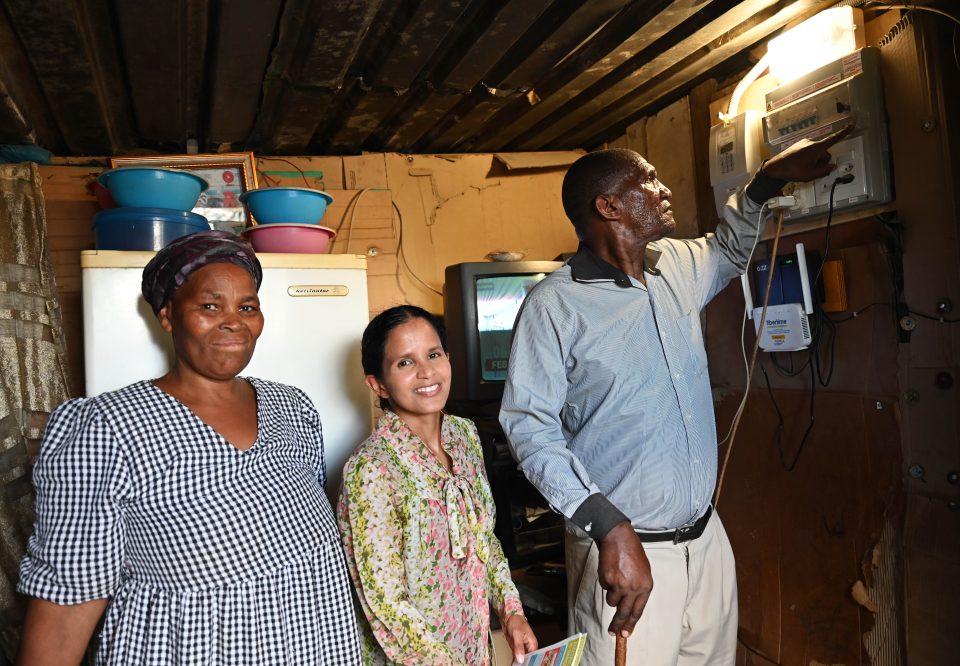
Electricity access is transforming lives in Nomzamo, where nearly 400 informal settlement homes have been connected to safe, reliable power through major infrastructure investment.
The City of Cape Town has completed a R4.9 million electrification project connecting 395 homes in the New Village informal settlement in Nomzamo to the formal electricity grid for the first time. The project forms part of a broader effort to expand infrastructure access and improve living conditions in underserved communities.
Access to electricity represents more than convenience. It directly improves household safety by reducing reliance on candles and paraffin, which are major causes of shack fires. It also enables families to refrigerate food, power appliances and create safer home environments.
The electrification programme also supports education. With access to lighting, learners and students can study after dark, improving educational outcomes and expanding future opportunities. Residents connected to the grid will also benefit from the City’s subsidised Lifeline Tariff, which provides up to 60 free basic electricity units monthly, helping reduce household expenses.
Mayoral Committee Member for Energy, Xanthea Limberg, said the project reflects a long-term commitment to infrastructure equity.
“The R4.9 million project is one of our most significant initiatives in recent years, bringing our total investment in electrification projects to over R35.6 million and completing 2,629 home connections. It demonstrates our commitment to delivering dignified and reliable electricity services to all communities,” she said.
The City has already invested more than R35.6 million in informal settlement electrification in recent years, completing thousands of connections. Plans are underway to deliver a further 304 electricity connections in Nomzamo, extending the benefits of safe and reliable power to more households.
Electrification projects form part of ongoing infrastructure upgrades aimed at improving living conditions, reducing fire risk and ensuring equitable access to essential services in informal settlements.
