
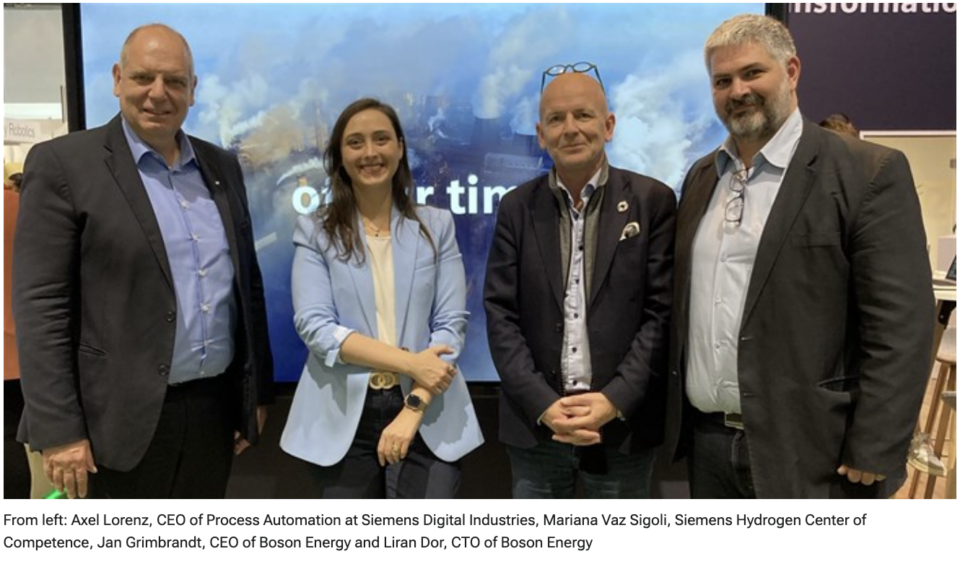
Siemens and Boson Energy have joined forces in a Memorandum of Understanding (MoU) to collaborate on a technology that converts non-recyclable waste into clean energy. This innovative approach aims to enhance local energy security and promote the use of hydrogen-powered electric vehicle charging infrastructure.
The collaboration focuses on developing and implementing a Waste-to-X solution that involves converting non-recyclable waste into clean (not green) hydrogen.
Carbon emission reduction is then achieved from using the waste and not from renewable energy, decreasing reliance on fossil fuels, and contributing to a circular economy.
Siemens’ extensive expertise and diverse portfolio allows it to provide consultancy and technology solutions, including applications from its Siemens Xcelerator portfolio, which includes automation, digitalisation, electrification, and instrumentation.
Widening the hydrogen pool
These resources are crucial to building a scalable and repeatable solution for enabling the waste-to-X technology and finding a wider set of use cases for clean hydrogen.
Boson Energy is a pioneer in the waste-to-energy space that has set ambitious targets to establish over 300 plants by 2030, with a production capacity of one million tons of hydrogen.
This ambition has the potential to significantly reduce CO2 emissions and create a more sustainable energy ecosystem.
By combining their strengths and resources, the two companies are hoping to make a lasting impact on the energy industry and contribute to accelerating hydrogen adoption
