
A legal support programme placing lawyers inside Western Cape police stations is expanding after an initial pilot showed improvements in investigative processes and police capacity.
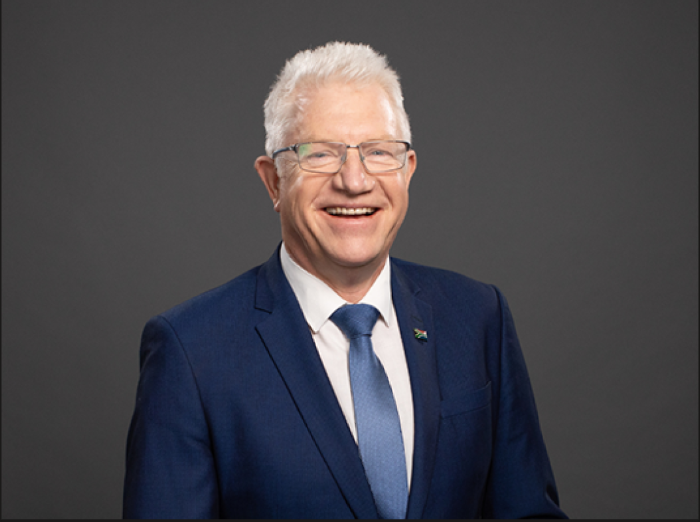
Western Cape Premier Alan Winde and Minister of Police Oversight and Community Safety Anroux Marais officially launched the expansion of the Lawyers in Police Stations Project in partnership with the South African Police Service (SAPS) and the Global Initiative Against Transnational Organized Crime (GI-TOC).
The initiative provides police officers with direct access to legal expertise, with lawyers working alongside station personnel to strengthen skills including statement-taking, evidence management and the preparation of case dockets.
The project was first piloted at Grassy Park SAPS in March 2025 after the precinct was identified as carrying a high burden of serious and organised crime.
Following an independent evaluation that found improvements in investigative processes, the programme has now expanded to the Mitchells Plain policing precinct.
Plans are also being developed to extend the initiative to the Stellenbosch policing precinct, including Stellenbosch Central, Kayamandi and Cloetesville, as well as other locations nationally.
Under the model, a lawyer is based at a participating police station full-time for three years, providing ongoing mentorship and capacity-building to officers.
The legal professionals do not take over police responsibilities or interfere with investigations. Instead, the programme is designed to strengthen the technical capabilities of officers carrying out those functions.
“This initiative recognises a fundamental reality: effective policing begins at police-station level,” Winde said.
“Far too many police stations across the Western Cape and the country are facing serious resourcing constraints which often impact service delivery.”
Major General Michael Jojo, representing the Western Cape SAPS Commissioner, described the initiative as a partnership intended to assist police while benefiting communities.
The programme provides legal mentorship and training for SAPS members, guidance on statements and legal advice and community support.
Marais said improving the quality of case preparation could also contribute to strengthening relationships between communities and police.
“The aim of placing trained legal professionals in community service stations is not only to improve the quality of case dockets presented to court but also to strengthen the trust relationship between the police and the community which is too often strained by frustrations related to unsuccessful prosecutions,” she said.
Winde said increasing arrests represented only one part of the criminal justice process.
“While law enforcement agencies must work hard to prevent crime and increase arrests, this must be followed by successful prosecutions. Through this project we are tangibly offering assistance to officers to build up watertight cases,” he said.
GI-TOC Executive Director Mark Shaw said the organisation’s international experience had demonstrated the importance of local policing, the rule of law and community trust.
“One lawyer cannot solve these challenges alone, but Mitchells Plain is an important opportunity to test and refine a practical model that, if successful, can grow and be replicated elsewhere,” Shaw said.
The project places particular emphasis on statement-taking and evidence management, areas that can influence whether investigations ultimately result in successful prosecutions.
Abie Isaacs, Chairperson of the Mitchells Plain Safety and Development Forum, said technical weaknesses in case preparation could have significant consequences for victims.
“Technical flaws in statement-taking dismantle case dockets before they even reach a courtroom, robbing victims of justice and shattering public trust,” Isaacs said.
“Having legal mentors working side-by-side with our local officers gives them the real-world guidance needed to build watertight cases.”
The partnership between the Western Cape Government, SAPS and GI-TOC will now provide an opportunity to assess whether the model can continue improving investigative capacity as it expands into additional police stations.
The partnership’s impact will ultimately depend on whether stronger case preparation leads to measurable improvements in prosecution outcomes and community trust as the programme expands.
