
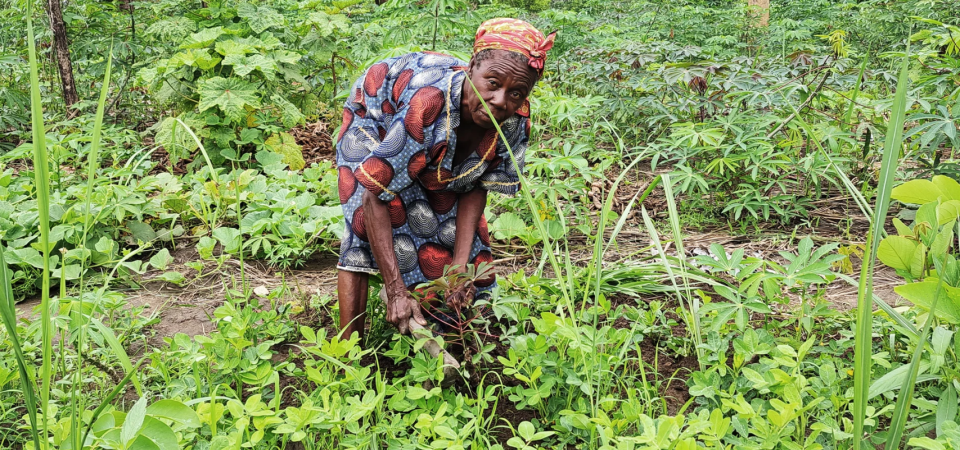
More than 37,500 people in the Central African Republic are rebuilding their lives through farming after ForAfrika helped establish hundreds of cooperatives across conflict-affected communities.
In the Central African Republic, where years of armed conflict, displacement and instability have left millions struggling to meet their basic needs, thousands of farming families are beginning to harvest something many believed had been lost: hope.
Across the regions of Sibut, Dekoa and Kaga Bandoro, fields that once produced little more than survival crops are now yielding enough food to feed families and generate income. The transformation is being driven by a combination of practical agricultural training, improved farming techniques and community cooperation.
ForAfrika, one of the few humanitarian organisations working consistently in some of the country’s most remote areas, has spent the past three years helping communities move beyond emergency relief by investing in long-term food security.
According to the United Nations Office for the Coordination of Humanitarian Affairs (UNOCHA), an estimated 2.4 million people—around 38% of the country’s population—are expected to face extreme vulnerability during 2025. For many communities, humanitarian aid remains essential, but organisations such as ForAfrika believe recovery also depends on helping families become self-reliant.
“Our priority is reaching the most remote areas where few other organisations operate,” said Felix Yangana, Programme Director for ForAfrika in the Central African Republic.
“We do this because we believe in Africa’s potential. Africa is our home, and we do not leave.”
The organisation’s approach focuses on strengthening local agriculture rather than creating dependence on food assistance.
Before the programme began, many farmers cultivated their land using little more than hoes and machetes. Limited access to quality seed, poor road infrastructure, unpredictable weather, crop pests, livestock disease and ongoing insecurity meant harvests were often too small to sustain families throughout the year.
To change this, ForAfrika worked with agricultural specialists, veterinarians and government departments to establish more than 340 farmer cooperatives across the three regions.
Since 2023, 135 farmer groups in Sibut, 105 in Dekoa and 100 in Kaga Bandoro have received maize, sesame, peanut and groundnut seed together with improved farming equipment, including hoes and machetes.
The programme also introduced pesticides, crop sprayers and livestock vaccination campaigns to reduce losses caused by pests and disease.
The results have been significant.
More than 7,480 families, representing over 37,500 people, have strengthened their food security. Many households are now producing enough food for their own needs while earning additional income by selling surplus crops.
For Marie Ingakola, a widowed mother of six from Sibut, the changes have transformed daily life.
Before joining a ForAfrika-supported cooperative, she harvested about 50 kilograms of sesame from her quarter-acre field. After receiving training and improved farming tools, her harvest increased to more than 150 kilograms.
“I used to struggle to feed my children,” she said.
“After joining a farmer group supported by ForAfrika, I received training and tools for ploughing. Now I grow maize, groundnuts and sesame, which give us enough food. I sell the surplus to cover school fees for my children and meet other family needs.”
The programme extends beyond crop production.
Recognising that diversified livelihoods strengthen resilience, farmer cooperatives have also invested in livestock.
Bruno Maleyombo, chairperson of a 25-member cooperative in Sibut, said the group began with only 10 animals—six goats and four sheep—in 2022.
Today, thanks to improved animal husbandry training and vaccination support, the cooperative manages 155 animals, including 80 goats and 45 sheep.
Each cooperative member has received two goats to raise at home, providing milk for their families while producing manure that improves soil fertility.
The remaining livestock are managed collectively, creating a shared source of income for future agricultural investment.
“This year, we plan to sell some livestock to fund our farming activities,” Bruno said.
“The community now sees us as an example of success, and we are proud of what we have achieved.”
ForAfrika believes this model demonstrates how humanitarian assistance can evolve into sustainable development.
Rather than focusing solely on emergency food aid, the organisation is helping communities develop the skills, resources and confidence needed to feed themselves, generate income and withstand future shocks.
In one of Africa’s most fragile humanitarian environments, the harvest now extends beyond maize, sesame and groundnuts.
It is producing stronger communities, more resilient families and a future shaped increasingly by opportunity rather than dependence.
