An exhibition inside the University of Johannesburg’s training mine traces the metals in vehicle exhaust systems back to the people and places involved in extracting them.
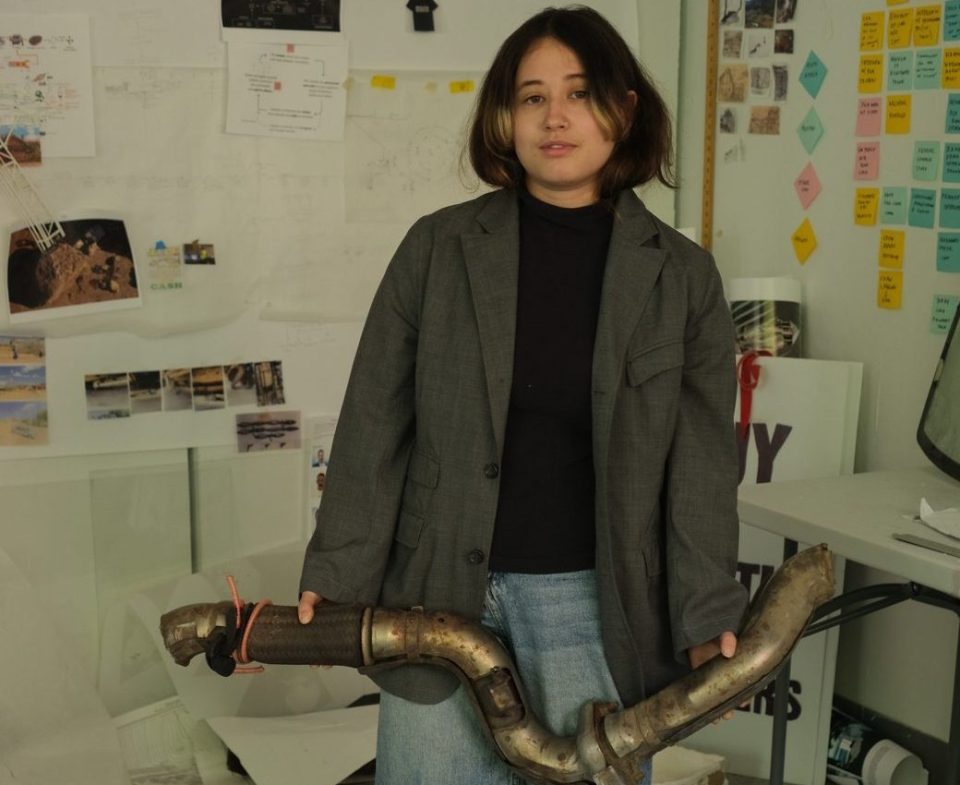
In The Hole World, artist Noa Mori starts with a report of a catalytic converter stolen from a car in Providence, Rhode Island. The converter contained small quantities of platinum, palladium and rhodium. Following those metals leads from an American car to South Africa’s mining economy, and raises a question about environmental responsibility: which parts of a supply chain do we account for when we call a technology cleaner?
Catalytic converters use platinum-group metals to turn harmful exhaust gases into less harmful emissions. Mori’s exhibition looks beyond that function to the work and trade that put those metals in a vehicle. Over several years of fieldwork, they followed the metals through formal and informal economies, from disused shafts worked by informal miners to catalytic converter theft networks and international finance.
The University of Johannesburg’s Sibanye-Stillwater Mining Simulacrum gives that inquiry a physical setting. Built for training, it has a vertical shaft, tunnels, rail tracks and a refuge bay. Mori uses dust, sound feedback, suspended objects and fragments of evidence to make visitors piece together connections between places and people who rarely appear in the same account of a supply chain.
The exhibition makes room for knowledge that can be overlooked when mining is discussed through production figures or market prices. Miners, geologists and scrap workers encounter the same materials under very different conditions and can each tell a different part of the story. Mori also asks what remains hidden, who gets to decide what becomes visible and what responsibility comes with trying to find out.
Curated by Simangaliso Sibiya and Adam Fertig, The Hole World is presented by UJ Arts & Culture. Mori is UJ’s 2026 artist-in-residence, hosted by the UJ Art Gallery.
The exhibition runs from 28 November 2026 to 30 January 2027, with access limited to the opening and scheduled viewings. The opening takes place from 11:00 to 14:00 on Saturday, 28 November, at the QK Building on UJ’s Doornfontein campus, with entry from Height Street. RSVP for the opening.
Public viewings are scheduled for 2 and 3 December from 13:00 to 15:00, and 5 December, 23 January and 30 January from 11:00 to 13:00. The venue has uneven ground and is reached by a flight of stairs, with no step-free access. Comfortable shoes are required, and protective equipment will be provided at the entrance.