As artificial intelligence makes digital fraud more sophisticated, financial institutions face a growing challenge: protecting customers even after passwords, identities and devices have been successfully verified.
The threat is changing because criminals increasingly do not need to break through the traditional digital front door. Instead, they can persuade customers to provide access, remotely control legitimate devices or operate accounts using credentials that appear completely authentic.
For consumers, the consequences can be significant. A successful account takeover can expose savings, personal information and financial accounts before the legitimate customer realises someone else is effectively operating alongside them.
It is also creating a new challenge for banks and financial technology companies. Verifying that the correct person opened an account does not necessarily prove that the same person is controlling it months or years later.
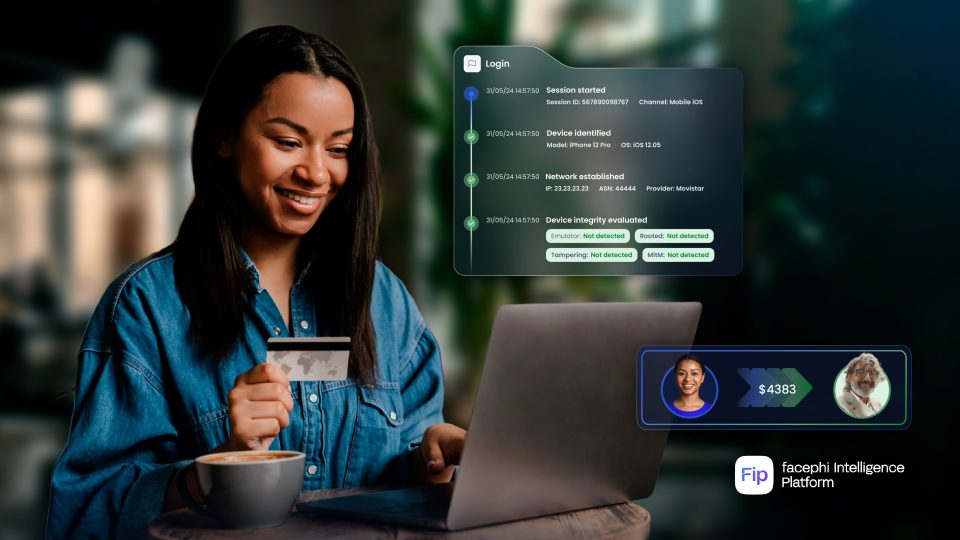
Technology company Facephi is attempting to address this problem through its newly launched Facephi Intelligence Platform, which uses artificial intelligence and behavioural information to assess what is happening throughout a customer’s digital interaction.
Rather than treating identity verification as a once-off security checkpoint, the system uses it as the beginning of an evolving customer profile.
Logins, devices and patterns of interaction can contribute additional information over time, allowing the technology to identify behaviour that appears inconsistent with how the legitimate account holder normally operates.
This becomes particularly important in cases involving remote-access fraud.
A customer, for example, could unknowingly install a malicious application that allows someone else to control their phone. The customer could subsequently open their banking application legitimately, meaning conventional authentication processes may detect nothing unusual.
If the criminal then assumes remote control and attempts a transaction, Facephi says its platform can identify remote-access signals and behavioural patterns that differ from the customer’s established activity.
The session can then be assigned a higher risk score, allowing the financial institution to intervene before a transaction is completed.
Importantly, the approach is designed to distinguish between the legitimate customer and the criminal activity rather than automatically locking the customer out of their account.
That distinction has a wider social impact.
As banking, payments and essential financial services become increasingly digital, security measures need to protect customers without creating new obstacles that make those services unnecessarily difficult to access.
Older customers, people with limited digital experience and consumers unfamiliar with increasingly sophisticated social-engineering techniques can be particularly exposed when criminals impersonate trusted institutions or persuade victims to grant access to their devices.
Artificial intelligence is adding another dimension to that threat.
Facephi cites INTERPOL data indicating that AI-powered fraud can be substantially more profitable than traditional fraud, demonstrating why financial institutions are increasingly looking beyond passwords and conventional identity checks.
“Artificial intelligence has industrialized fraud, and new frontier AI models, increasingly capable of acting on their own, are going to accelerate that shift,” says Facephi CEO Javier Mira.
“For years, we have helped banks know who is opening an account. The problem they bring us today is a different one: knowing who is operating right now, when the access is technically valid.”
The challenge highlights an important tension emerging as societies become increasingly dependent on digital services.
Technology has made banking faster and more accessible, allowing people to transfer money, pay accounts and manage their finances without travelling to physical branches. Those same digital systems, however, create opportunities for criminals capable of exploiting customers remotely and at scale.
Facephi, founded in 2012, works with more than 400 clients, including over 150 financial institutions across more than 35 countries. Its technology covers areas including biometric authentication, digital onboarding, deepfake protection and regulatory compliance.
Its latest platform reflects a broader shift towards continuous protection rather than relying primarily on security checks performed when an account is opened or accessed.
For consumers, that evolution could become increasingly important.
The next generation of digital security may not simply ask whether someone knows the correct password or possesses the correct device. It may need to understand whether the person using an account is actually behaving like its owner.
As criminals increasingly use artificial intelligence to make fraud more convincing and scalable, the social impact of AI may ultimately depend partly on whether the same technology can be used effectively to protect people from the threats it is helping to create.