South Africa’s new Vehicle Targeting System is helping border officials identify suspicious vehicles, recover stolen assets and improve traveller compliance without delaying legitimate cross-border movement.
The Border Management Authority (BMA) says the technology has already contributed to the recovery of 83 vehicles valued at R46.6 million during its first six months of operation.
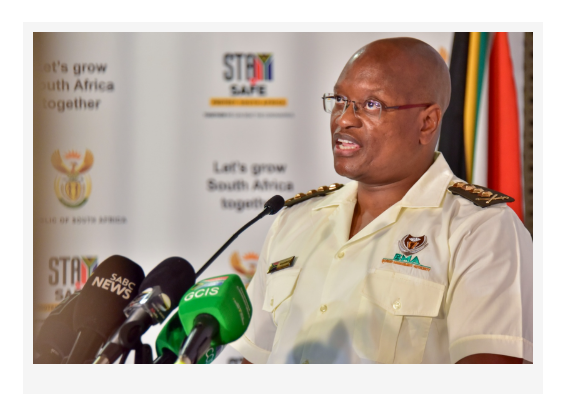
BMA Commissioner Michael Masiapato unveiled the Vehicle Targeting System (VTS) at the Lebombo Border Post, explaining that it changes how officials identify vehicles requiring additional scrutiny.
Instead of attempting to inspect every vehicle or relying on random checks, the system uses technology to flag potentially suspicious vehicles before they reach Border Guards.
“Our difficulty was one of arithmetic. Hundreds of thousands of vehicles cross our land borders. Inspecting all of them is impossible. Inspecting a few of them at random delays honest travellers while the vehicle that matters drives past, because it looks exactly like the one in front of it,” Masiapato said.
“So, we changed the question we were asking. Instead of asking a Border Guard to find the wrong vehicle in a queue of the right ones, we now tell the Border Guards which vehicle to look at, before the vehicle reaches them.”
The VTS became operational on 1 April 2026 at Maseru Bridge, Lebombo and Vioolsdrif. Beitbridge was added in August, followed by Ficksburg later that month and Caledonspoort at the end of September, bringing the system to six ports of entry.
Cameras positioned above border lanes automatically read vehicle registration plates travelling in both directions, during the day and at night.
Registration numbers are checked against information relating to stolen vehicles, confirmed cloned plates, potentially fraudulent ownership records and financed vehicles travelling without permission from the relevant financial institution.
When the system identifies a discrepancy, an alert is sent within seconds to Border Guards and port supervisors.
Officials can then scan the barcode on the vehicle licence disc, independently photograph and read the registration plate and verify the vehicle identification number stamped onto the vehicle. All three identifiers must correspond.
“In this case, the machine does the looking and the Border Guard does the judging. That is the right division of labour between the Border Guard and the device,” Masiapato said.
The technology is also intended to strengthen accountability. Each alert must be closed on the system with a recorded outcome linked to a specific official, shift and port of entry, creating a digital record of what happened after a vehicle was flagged.
Masiapato stressed that the technology should not be regarded as a complete solution to corruption.
“I am not telling you that technology has ended corruption at our borders. I am telling you that we have given the BMA Border Guard better information, and that every decision taken after the alert is now a matter of record.”
“Discretion that leaves a trail is a very different thing from discretion that does not,” he added.
During the first three months of operation at three ports, the cameras recorded 422 107 vehicle sightings. A further 170 962 vehicles were monitored across five ports during the following three months.
The 83 vehicle recoveries included seven stolen vehicles, eight with falsified ownership records, eight cloned vehicles, 27 stopped because of false bank letters and 33 financed vehicles that were recovered, settled or returned to their financing institutions.
Separately, 1 817 vehicles were stopped during 2026 because drivers could not produce written consent from the banks or finance houses that owned them. These vehicles had an estimated combined value of approximately R636 million.
However, the BMA believes the system’s impact should not be judged solely by the number of vehicles intercepted.
Masiapato said an important measure of success is whether motorists increasingly arrive at borders with the correct documentation, reducing unnecessary interventions and queues for compliant travellers.
“The real test of this kind of a system is not how many vehicles we stop. It is how much drivers arrive already carrying the right paperwork, because that is an indication of behaviour change and improved compliance,” he said.
There are early indications of such a change. In the quarter ending September 2026, 27.9% of recorded financed vehicles already had valid border letters when first identified, compared with 23.7% in the preceding quarter.
At Maseru Bridge, the proportion increased from 13.2% to 30% in one quarter, while at Lebombo compliance rose from 23.4% to 37.9% by September.
Alerts involving financed vehicles without the required documentation at Lebombo also declined from 1 697 in July to 793 in September.
For travellers, improved compliance could mean fewer disputes and delays at ports of entry. For authorities, better targeting allows Border Guards to concentrate resources on vehicles presenting genuine risks rather than subjecting large numbers of compliant motorists to unnecessary inspections.
Masiapato urged financial institutions to maintain accurate information, respond quickly to verification requests and ensure customers understand what documentation they require before taking financed vehicles across international borders.
The BMA says future assessments of the VTS will look beyond interception figures to determine whether the technology helps identify stolen vehicles, disrupt criminal networks, support successful prosecutions and return recovered vehicles to their lawful owners.