
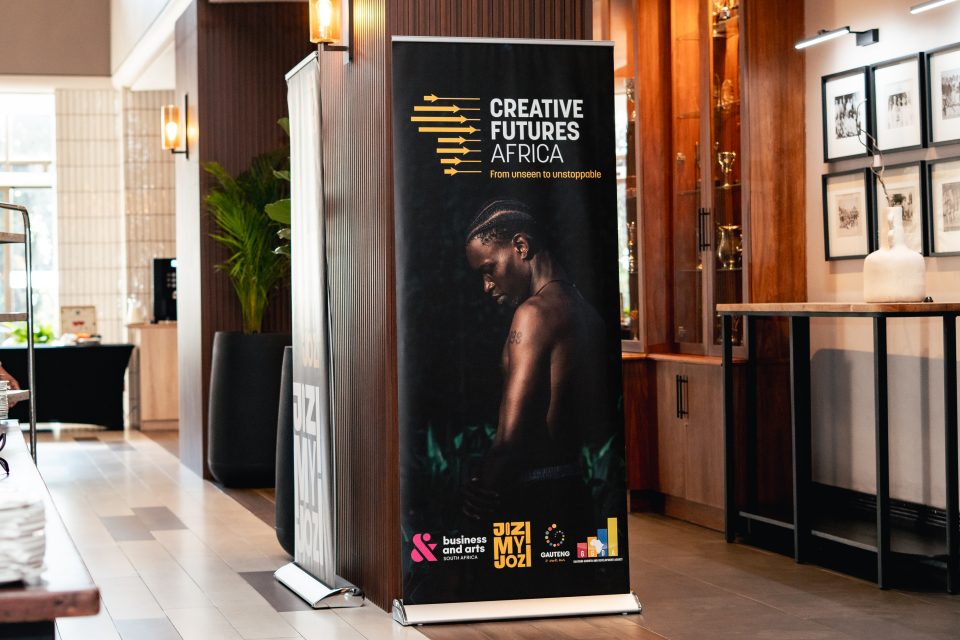
Johannesburg’s creative community will get a public platform to shape the city’s creative economy as Creative Futures Africa moves from summit discussion toward practical action together.
Jozi My Jozi and Business and Arts South Africa (BASA), together with Andani.Africa and Creative Capital, will host Creative Futures Africa: Beyond the Summit on 8 October at A42 House in Parktown North.
The free public event, taking place from 17:30 to 19:30 as part of Design Week South Africa, will open discussions from September’s invitation-only Creative Futures Africa Summit to artists, designers, entrepreneurs, students, funders, cultural organisations and members of the public.
The objective is to move beyond discussing the value of creativity and begin identifying the practical conditions required for Johannesburg’s creative economy to grow.
The second Creative Futures Africa Summit brought together leaders from the creative economy, business, finance, technology, tourism, policy, climate and urban development around a central proposition: Africa’s creative industries should be viewed as economic and social infrastructure rather than as a peripheral sector.
That distinction matters for Johannesburg, where music, fashion, design, food, heritage, visual arts, entrepreneurship and street culture are closely connected to both the city’s identity and its economy.
Creative businesses generate livelihoods, attract visitors, activate neighbourhoods and contribute to how cities are experienced and understood. However, translating creativity into sustainable economic opportunity requires more than talent.
Discussions at the Summit identified investment, appropriate funding models, stronger intellectual-property frameworks, reliable industry data, access to markets, infrastructure and mobility as some of the conditions required for creative enterprises to grow.
The role of cities also emerged as a central theme.
Successful creative cities are not created through destination marketing alone. They require spaces where people can produce and sell work, venues where culture can be experienced, transport systems that connect audiences and creators, safe public spaces and economic structures that allow local businesses to participate in the value being generated.
For Johannesburg, the conversation therefore extends beyond promoting its creative identity.
It is also about whether artists, designers, musicians, makers, cultural workers, traders and entrepreneurs have the infrastructure, capital and market access required to build sustainable businesses around their work.
“Creative Futures Africa was designed to move beyond broad agreement that creativity matters,” said Dawn Robertson, Visitor and Creative Economy Catalyst at Jozi My Jozi.
“The Summit made a strong case for the practical systems that make creative work viable: investment, access, safe and connected cities, stronger partnerships and space for people to make, trade, perform and grow.”
Beyond the Summit is intended to test those ideas against the experiences of people working within Johannesburg’s creative economy every day.
Robertson said the public conversation will give creatives an opportunity to challenge assumptions made during the Summit, identify what may have been overlooked and contribute directly to what happens next.
“Johannesburg’s creative future cannot be designed behind closed doors; it has to be built with the people, places and enterprises that give this city its energy and character,” she said.
That participatory approach is particularly important in a sector made up largely of entrepreneurs, freelancers, small businesses and independent practitioners who can experience the challenges of accessing funding, infrastructure and markets differently from larger institutions.
Opening the conversation therefore creates an opportunity to connect high-level discussions about policy and investment with the realities facing people producing creative work on the ground.
BASA CEO Beth Arendse said strengthening Africa’s creative economies requires participation from the people directly experiencing the conditions within the sector.“Creative Futures Africa was convened to strengthen the conditions in which South Africa’s and Africa’s creative economies can flourish,” Arendse said.
“That requires more than dialogue between institutions; it requires the knowledge, challenge and participation of the artists, designers, cultural practitioners and entrepreneurs who experience those conditions first-hand.”
The event will take the form of a facilitated panel discussion involving voices from Johannesburg’s creative, cultural, business and city-making communities.
Participants will explore issues including investment, infrastructure, access to markets, development of creative cities, public spaces and inclusive economic opportunity before the conversation is opened to the audience.
The intention is not to repeat the September Summit, but to subject its emerging ideas to wider public scrutiny and begin developing a shared programme of action.
The discussion forms part of Design Week South Africa’s Johannesburg programme, which runs from 8 to 11 October.
This year’s theme, “The Shape of Us”, examines how design and creativity influence the places people live in, the economies they build and the stories communities tell about themselves.
Design Week South Africa includes exhibitions, studio and urban tours, product launches, installations, workshops and panel discussions in Johannesburg and Cape Town.
The inclusion of Creative Futures Africa within that programme also places the economic conversation directly alongside the people and businesses producing creative work.
For Johannesburg, the opportunity is significant.
The city already possesses a substantial creative identity. The challenge is ensuring that cultural energy can translate into sustainable businesses, employment, investment and opportunities for participation across communities.
That requires collaboration between government, business, investors, cultural organisations and creatives themselves.
It also requires recognising that the creative economy is not limited to entertainment or cultural events. It intersects with tourism, technology, property development, retail, public space, education, manufacturing and the broader identity of the city.
Creative Futures Africa: Beyond the Summit provides an opportunity to bring those intersections into the same room.
The measure of success will ultimately not be how many people agree that creativity is important.
It will be whether the conversation helps create better conditions for Johannesburg’s creative people and businesses to make, trade, perform, invest, collaborate and grow.
