
South Africa has launched a time-bound GBVF recovery plan to unblock stalled cases, fast-track forensic evidence and make municipalities address everyday risks facing women across communities.
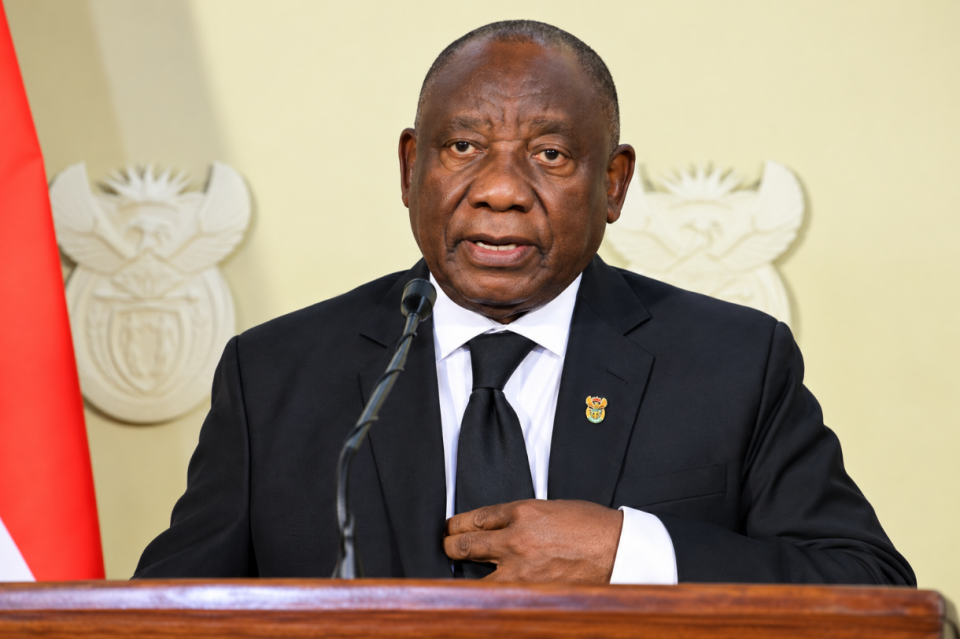
President Cyril Ramaphosa has announced four immediate measures aimed at strengthening the criminal justice system’s response to violence against women and children, with government departments and municipalities given specific 60- and 90-day deadlines. The Presidency
The first intervention targets cases that have stalled inside the justice system.
Police and Justice authorities have been instructed to undertake a national case-recovery operation covering unresolved murders, attempted murders, rapes and serious sexual offences involving women and children.
Within 60 days, the audit must establish how many unresolved cases exist, how long they have been outstanding, which cases are waiting for forensic evidence, where suspects have been identified but not arrested and where investigative or prosecutorial action has been unreasonably delayed. The Presidency
Within 90 days, priority and stalled cases must have individual recovery plans.
Each plan must identify what still needs to happen, which official is responsible and the deadline for moving the case forward. The Presidency
That turns case recovery into a measurable process rather than a general commitment.
For families waiting for investigations to progress and survivors whose cases have become trapped in administrative or investigative delays, the intervention is intended to establish responsibility for the next step in each priority case.
Forensic delays form the second part of the recovery plan.
Police leadership and forensic authorities have been given 60 days to produce a funded strategy for reducing forensic backlogs and establishing turnaround standards for priority GBVF cases. The Presidency
The plan must identify the size and age of the existing backlog, shortages of staff and equipment, the resources required and dates by which outstanding work should be reduced.
Forensic samples linked to cases involving the rape or murder of women and children are to be ring-fenced for urgent processing.
Government will then be required to report publicly every quarter on whether the turnaround standards are being achieved. The Presidency
The practical impact could be significant.
DNA and other forensic evidence can be critical to identifying suspects, strengthening criminal cases and helping prosecutors determine whether sufficient evidence exists to proceed.
Ramaphosa said cases should not collapse because evidence remains unprocessed, investigations are poorly conducted or survivors are treated without dignity. Government of South Africa
The third measure shifts part of the response outside police stations and courts and into the physical environments where women live, travel and work.
Every municipality has been instructed to begin a women’s safety audit.
Working with provincial governments and police, municipalities must identify high-risk locations and, within 60 days, document hazards including broken streetlights, overgrown public areas, abandoned buildings, unsafe transport routes, poorly secured parks and other conditions that can increase vulnerability. The Presidency
Within 90 days of completing those audits, the most urgent hazards must either have been fixed or included in funded implementation plans with clear completion dates.
This introduces basic municipal infrastructure into the GBVF response.
A functioning streetlight will not eliminate gender-based violence, but lighting, maintained public spaces, secure transport routes and properly managed facilities can influence whether people are able to move through communities more safely.
“Women should not have to live in fear because government has failed to repair a light, clear a public space, process evidence or enforce a law,” Ramaphosa said. Government of South Africa
The fourth intervention focuses on harmful alcohol use as an aggravating factor in interpersonal violence.
Trade, Industry and Competition Minister Parks Tau has been tasked, together with the Health, Social Development, Police and Cooperative Governance portfolios, with preparing a coordinated legislative and enforcement package within 60 days. The Presidency
Ramaphosa stressed that alcohol does not cause GBV and does not remove responsibility from perpetrators, but said harmful alcohol consumption needs to form part of the broader prevention response.
Research from the South African Medical Research Council has previously identified a relationship between alcohol and femicide while emphasising that intimate-partner violence remains a major component of women’s murders.
The SAMRC’s most recent national femicide study found that about 60% of women murdered in 2020/21 were killed by an intimate partner. The study also found fewer than one in five intimate-partner femicide cases resulted in a conviction. South African Medical Research Council
That finding reinforces why the new measures focus not only on prevention but also on what happens after a case enters the criminal justice system.
The plan introduces another accountability mechanism through public reporting.
The Inter-Ministerial Committee and National Council on Gender-Based Violence and Femicide will monitor implementation, with the first consolidated progress report expected within 90 days and further reports every quarter. The Presidency
Those reports should make it possible to track whether forensic backlogs are shrinking, whether stalled cases are moving, whether municipalities are repairing identified hazards and whether responsible institutions are meeting their deadlines.
The measures also sit within the National Strategic Plan on Gender-Based Violence and Femicide rather than replacing the broader response already under way.
Ramaphosa said additional police officers, programmes, resources and stronger laws cannot by themselves end violence against women.
He placed particular emphasis on changing social attitudes around control, rejection and consent, arguing that prevention needs to begin in homes and in how boys understand relationships with girls and women. Government of South Africa
“For too long, gender-based violence has been treated as a women’s problem to solve. That must change,” he said. Government of South Africa
The President also called on men to take a more visible role in challenging violence, highlighting public interventions by figures including Siya Kolisi and Temba Bavuma.
Sport, Arts and Culture has been directed to strengthen the work of the Moral Regeneration Movement, while government also acknowledged the role played by faith-based organisations, community groups, educational institutions, traditional leaders and women’s and youth organisations.
The four-point plan therefore combines two approaches.
One is immediate: find stalled cases, process evidence, assign responsibility and address unsafe public spaces.
The other is preventative: challenge social norms and behaviours that allow violence against women to persist.
The effectiveness of the intervention can now be tracked against the deadlines government itself has announced.
Within 60 days, the country should have a clearer picture of unresolved cases, forensic backlogs and municipal safety risks.
Within 90 days, priority cases should have recovery plans, urgent safety hazards should be addressed or funded for action, and South Africans should receive the first consolidated public progress report.
For survivors and families, those deadlines turn the national GBVF response into something more concrete: identifiable actions, named responsibilities and dates against which progress can be measured.
