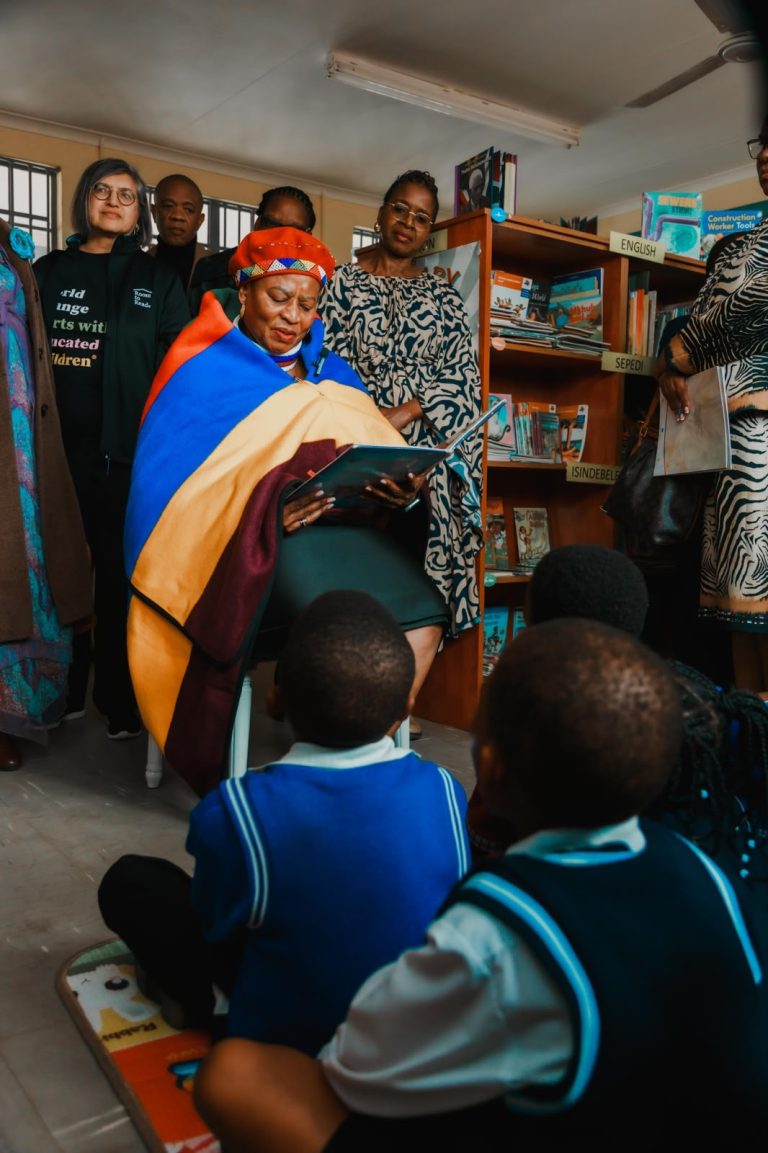
First Lady Dr Tshepo Motsepe has called for stronger regional cooperation to expand early childhood development access, with 3.5 million South African children currently outside early learning programmes.
Speaking at a spousal luncheon for First Ladies from Southern African Development Community (SADC) countries on the margins of the 46th SADC Summit in Durban, Motsepe positioned investment in early childhood development (ECD) as central to the region’s long-term development.
“Early Childhood Development is not simply a social investment; it is one of the most powerful foundations for human development, economic growth, and social cohesion,” she said.
While South Africa has expanded early learning opportunities, Motsepe said the number of children still excluded demonstrated the scale of the work ahead.
“Today, approximately 3.5 million young children in our country are not accessing early learning programmes. Behind this number are children whose potential remains untapped and families who require greater support to ensure that every child has the opportunity to thrive,” she said.
The gathering brought together First Ladies from across SADC and provided a platform for discussing how countries can strengthen cooperation around the wellbeing and development of children.
Motsepe said regional collaboration could support the sharing of knowledge, effective approaches and experiences as countries work to improve outcomes for young children.
“As leaders and advocates, we understand that the future of our region depends on the opportunities we create for our youngest citizens today,” she said.
In South Africa, ECD is recognised as a priority within the National Development Plan 2030, providing a policy framework for expanding access and improving the quality of early learning.
Motsepe linked investment in children with wider efforts to address poverty and inequality while strengthening future social and economic participation.
“By working together, and by building on the commitments outlined in South Africa’s National Development Plan 2030 and similar regional aspirations, we can ensure that every child has the opportunity to learn, grow, and realise their full potential,” she said.
She also highlighted the role of the Department of Basic Education in expanding and transforming the ECD sector, including work around registration, funding, quality and access.
Civil society organisations, local government and private-sector partners were identified as part of the wider network supporting children, families, practitioners and early learning programmes.
“This collective effort demonstrates what is possible when we unite around a common purpose: ensuring that every child, regardless of where they are born or the circumstances of their family, has access to quality care, protection, nutrition, and early learning,” Motsepe said.
The luncheon also highlighted the work of the Early Care Foundation, a South African non-profit organisation supporting improvements in ECD services, particularly within underserved communities.
The organisation has worked in the sector for more than 35 years, with its activities including training, mentoring and capacity-building for ECD principals and practitioners.
Motsepe said quality early childhood development should be regarded as a right rather than a privilege and called for the regional engagement to translate into stronger partnerships and continued action.
“As we engage today, let us be guided by our shared vision for Africa’s children and by the conviction that quality early childhood development is not a privilege, but a right,” she said.
The engagement places ECD within a broader regional development conversation, bringing together government leadership, civil society and other partners around expanding early learning opportunities for children across Southern Africa.
The scale of the gap makes regional cooperation urgent, with 3.5 million South African children still outside early learning programmes highlighting the immediate challenge facing policymakers.