
The Democratic Republic of the Congo is reviewing stronger measures to reduce plastic packaging pollution through new policy reforms aimed at protecting communities and the environment.
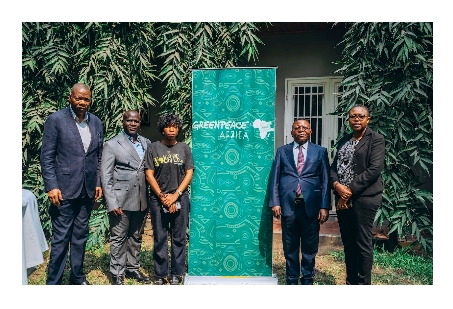
Government officials, environmental experts, civil society organisations, academics and private sector representatives have gathered for a two-day consultation led by Greenpeace Africa and the Ministry of Environment, Sustainable Development and New Climate Economy to strengthen the country’s response to plastic pollution.
The workshop focuses on closing gaps in existing legislation and improving enforcement of regulations introduced in 2018 to restrict certain single-use plastic products.
Plastic waste has become one of the Democratic Republic of the Congo’s most significant environmental challenges, particularly in Kinshasa, where blocked drainage systems contribute to flooding, damage ecosystems and increase risks to public health.
Participants are exploring a range of policy options, including the gradual phase-out of unnecessary single-use plastics, Extended Producer Responsibility (EPR), deposit-return systems for plastic bottles, environmental fiscal measures and refill-and-reuse systems designed to reduce waste at its source.
According to Prof. Georges Milumbu, Greenpeace Africa’s DRC Country Coordinator, stronger implementation is now essential.
“Although the DRC adopted strict measures to ban single-use plastics in 2018, enforcement has remained weak due to numerous exemptions that undermine the effectiveness of the regulation. This workshop presents a critical opportunity for stakeholders to strengthen the law and ensure it delivers the level of environmental protection that Congolese citizens deserve.”
Greenpeace Africa says plastic pollution has evolved beyond an environmental concern and now poses serious threats to public health, urban resilience and sustainable development.
“Single-use plastics are choking Kinshasa’s streets and poisoning its communities,” said Hellen Kahaso Dena, Project Lead for Greenpeace Africa’s Plastics Campaign.
“Plastic waste is much more than a visual nuisance—it has intensified flooding over the years and is contaminating our food systems. Addressing this crisis requires bold political leadership and transformative solutions that go beyond waste management.”
With plastic recycling rates in the Democratic Republic of the Congo estimated at only 1% to 4%, most plastic waste ends up in informal dumpsites, rivers and eventually the Congo River, placing additional pressure on one of Africa’s most important freshwater ecosystems.
Greenpeace Africa believes the country’s long-term response should focus on preventing waste before it is created by expanding circular economy approaches that encourage refill and reuse instead of disposable packaging.
“To prevent waste, build a circular economy and create green jobs, the DRC must integrate refill and reuse systems into its national policies and regulatory frameworks,” said Dena.
The workshop will conclude with a set of jointly developed recommendations that will be submitted to the government to help strengthen existing anti-single-use plastic regulations and support the country’s transition towards more sustainable packaging systems.
