
Afrobarometer has presented new continental data revealing widespread water and sanitation challenges, urging stronger accountability, climate resilience and investment across Africa.
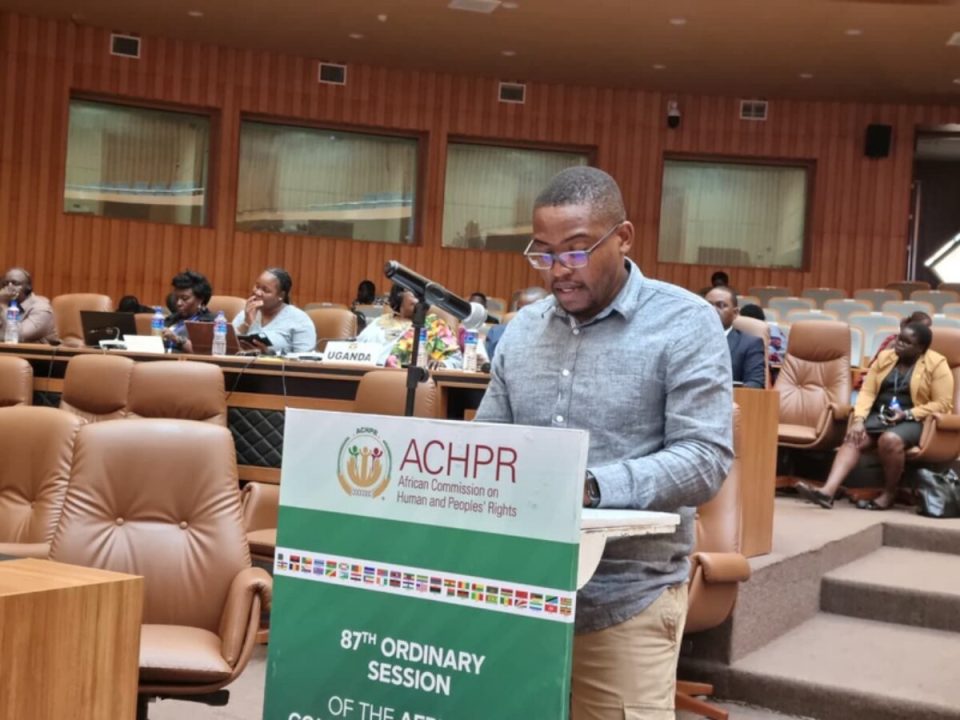
Water security and sanitation remain among the most pressing challenges facing millions of Africans, according to new findings presented by Afrobarometer at the 83rd Ordinary Session of the African Commission on Human and Peoples’ Rights in Banjul, The Gambia.
The findings were delivered by Nyasha Mpani, Project Leader of the Institute for Justice and Reconciliation’s Data for Governance Alliance Project, on behalf of Afrobarometer during the Commission’s deliberations held as part of the African Union’s Year of Water Sustainability.
Drawing on data collected across 38 African countries, the presentation highlighted the growing scale of the continent’s water and sanitation crisis and the urgent need for coordinated action to address inequalities, infrastructure gaps and climate-related pressures.
Among the most significant findings was that 57% of Africans reported going without enough clean water at least once during the previous year, while one in four experienced shortages many times or consistently throughout the year.
The research also found that citizens now rank water supply as the third most important issue facing their countries, behind only health services and unemployment.
Access to water infrastructure continues to reflect significant inequalities. While 67% of urban residents reported access to piped water, only 31% of people living in rural communities had similar access. The sanitation gap is equally stark, with only 25% of communities connected to sewage systems, falling to just 8% in rural areas.
The data further revealed that water insecurity is worsening. The proportion of Africans reporting water shortages has increased from 46% to 56% over the past decade, suggesting that progress has not kept pace with growing demand and environmental pressures.
Climate change is also emerging as a major factor affecting water security. More than one-third of Africans surveyed said they had been forced to reduce water consumption or change their primary water source because of climate-related impacts. In countries such as Tunisia and Guinea, that figure exceeds 50%.
Public confidence in water and sanitation management remains relatively low, with only 39% of citizens on average saying their governments are performing adequately in these areas.
In response to the findings, Afrobarometer called on the African Commission to adopt a number of measures aimed at strengthening accountability and improving service delivery.
These include establishing clearer accountability mechanisms for member states under Article 16 of the African Charter, requiring more detailed reporting to expose inequalities affecting rural communities, women and lower-income groups, and formally recognising climate change as a driver of human rights challenges related to water access.
Afrobarometer also recommended the introduction of stronger continental benchmarks and measurable performance indicators that can be used to assess progress and strengthen accountability across member states.
The presentation received positive feedback from both the Commission and national delegations attending the session. Representatives from South Africa and Tanzania expressed particular interest in the findings and engaged directly with the Afrobarometer team following the presentation.
Both delegations formally requested access to the underlying data, indicating plans to use the evidence to inform national responses to water and sanitation challenges.
The response highlights the growing role that citizen-generated data can play in supporting evidence-based policymaking and strengthening human rights accountability across the continent.
As Africa continues to face mounting pressures linked to population growth, infrastructure deficits and climate change, the findings provide a reminder that access to safe water and sanitation remains fundamental to health, dignity, economic development and sustainable communities.
