
At a time when South Africa continues to grapple with literacy challenges, a primary school in Soweto has demonstrated what meaningful intervention can look like — not through policy alone, but through lived experience.
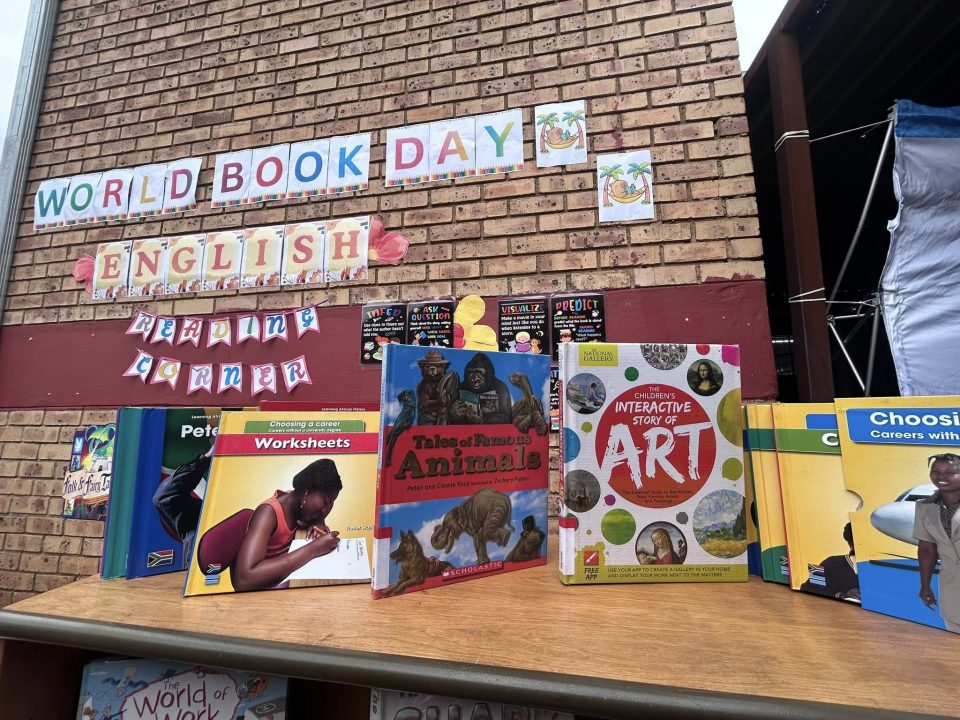
On 23 April 2026, World Book and Copyright Day moved beyond its global message and into the classroom at Elsie Ngidi Primary School in Chiawelo, where learners didn’t just hear about books — they experienced them.
Hosted by Nal’ibali in partnership with the Gauteng Department of Education, the event transformed a global observance into a practical, community-driven moment of impact.
From awareness to experience
Globally, World Book Day highlights the role of books, literacy, and intellectual property in development. But in Chiawelo, those ideas were translated into something tangible.
Learners engaged in storytelling sessions, watched a dramatization of Tselane and Dimo, performed poetry, and participated in interactive singing — turning literacy into something dynamic, cultural, and accessible.
This matters.
Because in South Africa, the literacy crisis is not abstract. It is lived daily by children who struggle to read with understanding by the age of 10 — a critical benchmark that shapes future learning outcomes.
Why books still matter in a digital world
In an era dominated by screens, the event reinforced a counterintuitive but critical truth: books remain irreplaceable.
“Nothing can replace what a book does,” said Lorato Trok, Executive Director of Nal’ibali.
“Not the internet, not screens. A book shapes how a child thinks, imagines, and understands the world.”
The emphasis was not just on reading — but on engagement.
Holding a book. Seeing yourself in its pages. Hearing stories in your own language. Experiencing reading as something enjoyable, not instructional.
Literacy as a social equaliser
The event also highlighted a deeper reality: literacy is not just an education issue — it is a social one.
Access to books, exposure to storytelling, and early reading habits are directly linked to long-term outcomes in education, employment, and participation in society.
For many children in under-resourced communities, these opportunities are not guaranteed.
Which is why initiatives like Nal’ibali’s are critical — not as once-off events, but as part of a broader ecosystem working to close the literacy gap.
Partnerships driving real impact
The involvement of the Gauteng Department of Education and other stakeholders signals an important shift: literacy is increasingly being recognised as a shared responsibility.
Government, civil society, educators, and communities all have a role to play.
And when aligned, the impact becomes visible — not just in statistics, but in moments like this: a classroom full of children engaged, curious, and connected to stories.
A reminder of what matters
World Book Day in Soweto was not just a celebration. It was a reminder.
That access matters.
That representation matters.
That reading for enjoyment matters.
And that behind every book is the potential to change a child’s trajectory.
Because ultimately, literacy is not just about reading words.
It is about opening worlds.
