
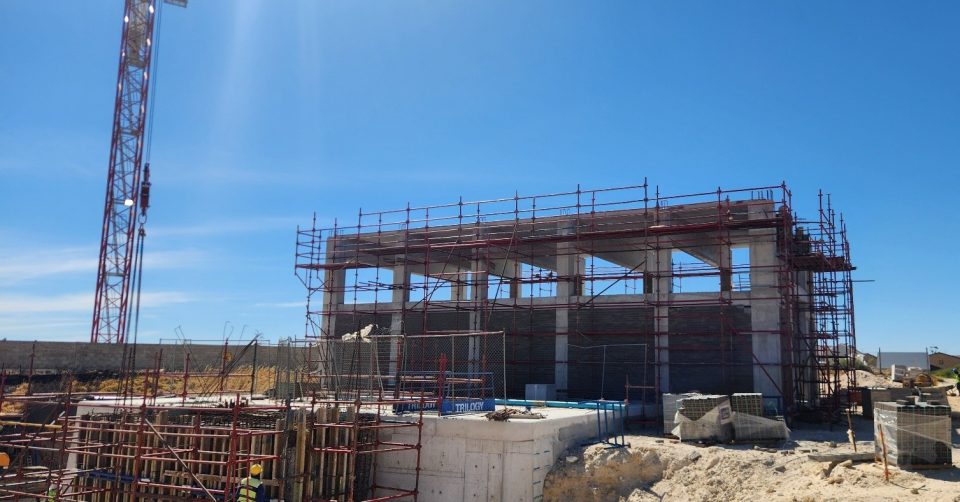
The City of Cape Town says it remains on track with a multi-million rand investment to strengthen the Helderberg sewer network, confirming that approximately R430 million is being spent on critical infrastructure upgrades aimed at improving sewage conveyance and preventing overflows in Strand and surrounding areas.
The investment, led by the City’s Water and Sanitation Directorate, includes major works on the Trappies Bulk Sewer, the Gordon’s Bay Pump Station and Rising Main, targeted sewer pipe replacements, and ongoing maintenance of coastal sewer pump stations. The City says these projects are central to stabilising the network and addressing historical failures.
Despite construction continuing, the City has reiterated that coastal water quality along the Helderberg coastline, including Strand Beach, remains good and safe for swimming. Monitoring data shows consistent compliance, supported by intensified daily testing along the Strand coastline.
Councillor Zahid Badroodien, Mayoral Committee Member for Water and Sanitation, acknowledged public frustration following sewer overflows experienced in parts of Strand over the past year, particularly near the beachfront. He said the City understands residents’ concerns and has committed to transparency through quarterly community feedback sessions, with the most recent meeting held in December 2025.
According to the City, sewer overflows recorded last year were caused by multiple, unrelated faults across the network, including blockages, pipe collapses, pump station failures, a sinkhole and legacy construction defects. While these incidents have placed pressure on the system, the City stressed that not all failures are linked to the Trappies Bulk Sewer rehabilitation.
The Trappies Bulk Sewer upgrade remains a priority project, with a total value of R146 million. Of this, R69.1 million has been allocated for the 2025/26 financial year. Work along De Villiers Street is substantially complete and was reopened in December 2025, with final reinstatement scheduled to conclude by the end of January 2026. Further construction phases will begin this year and continue into 2026, including work near the Lourens River. The rehabilitation makes use of cured-in-pipe lining technology, which allows the City to strengthen existing pipes while avoiding extensive excavation in confined areas.
Another key project is the R279 million Gordon’s Bay Pump Station and Rising Main upgrade, which is designed to improve regional sewer capacity serving Strand and neighbouring communities. The City plans to spend R117 million on this project in the current financial year. Construction of the rising main, which began in March 2024, is 68% complete, with commissioning expected in May 2026. The pump station itself is approximately 78% complete, with more than 6km of the total 7.5km rising main already installed.
In addition to large-scale upgrades, the City is rehabilitating 2,000 metres of sewer pipes in Louis Trichardt and surrounding streets in Somerset West at a cost of R3.9 million. This forms part of the City’s annual pipe replacement programme aimed at improving reliability and reducing the likelihood of overflows.
Further investment exceeding R1 million is being directed towards maintenance and operational improvements at the Gordon’s Bay Road, Sarel Cilliers and Da Gama coastal sewer pump stations. This includes repairs, preventative maintenance and the procurement of spare pumps to reduce system downtime and overflow risks.
To mitigate immediate risks while upgrades continue, the City has implemented several operational measures, including adjusting pump station operating levels, increasing maintenance and de-ragging, intensifying stormwater outfall monitoring, and maintaining 24-hour emergency response teams.
The City’s Deputy Mayor and Mayoral Committee Member for Spatial Planning and Environment, Alderman Eddie Andrews, said extensive water quality monitoring confirms that Strand Beach remains safe. Between October and December 2025, 245 water samples were collected between Strand and Gordon’s Bay, with a compliance rate of 96%. All recorded failures occurred during a short period of heavy rainfall in early October, highlighting the impact of seasonal weather patterns on coastal water quality.
The City confirmed that it follows a formal Coastal Sewage Pollution Response Protocol when overflows occur, involving coordinated action between departments, on-site containment, environmental sampling, public health advisories and follow-up testing before reopening affected areas.
Looking ahead, residents can expect the removal of temporary over-pumping equipment, continued high-frequency monitoring, rapid response to incidents and clear public communication when required. Permanent signage remains in place in areas where overflow risk exists.
The City says it remains committed to resolving the challenges facing the Strand sewer network, safeguarding public health and protecting the marine environment, and will continue to provide updates as the work progresses.
