
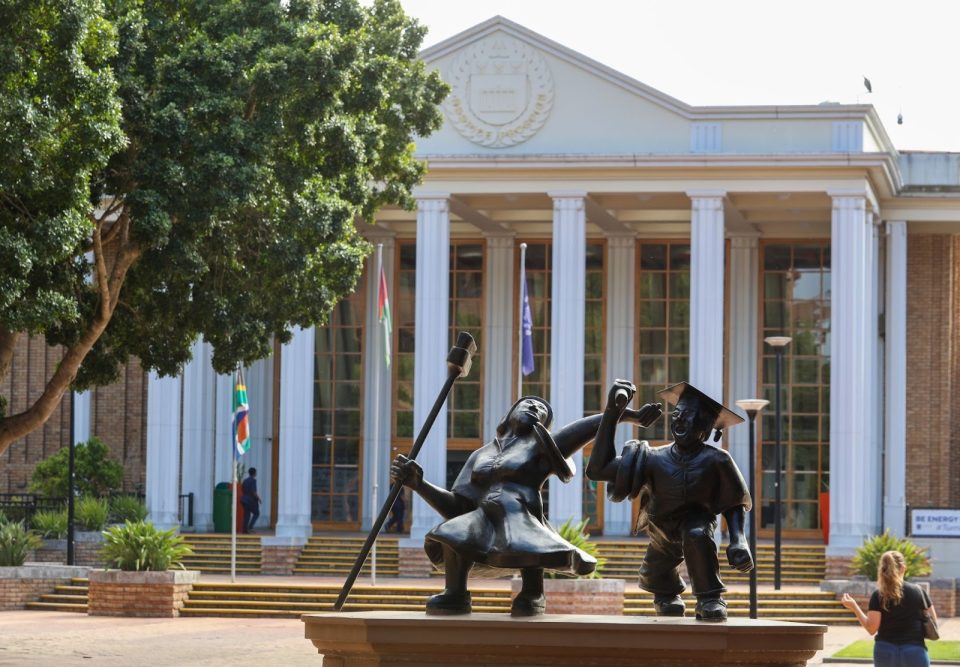
The University of the Western Cape (UWC) hosts its Summer Graduation and 771 students will be leaving the Jakes Gerwel Hall with their academic credentials. At this graduation ceremony, 60 doctoral degrees and 94 masters degrees will be conferred. One student who excelled even before stepping on the graduation stage is Rukshana Ahmed. As a Dentistry lecturer and student, she recently participated in a COP30-linked session on Oral and Respiratory Health: Implications for Dentistry. Her presentation and her thesis emphasised that dental care cannot be separated from environmental responsibility, especially as climate change and air pollution reshape disease patterns and healthcare delivery.
Ahmed explained that conventional disinfectants often pose hazards to both human health and the environment. In contrast, eco-friendly alternatives such as hypochlorous acid (HOCl) and hydrogen peroxide (H₂O₂) offer effective microbial control while reducing chemical waste and occupational exposure. These solutions align with the UN Sustainable Development Goals, particularly those focused on health, clean water and climate action.
“Climate change is a reality and at some point you need to assess the factors that are influencing this. If you look at what we do as dentists, you have to assess the chemicals and products that we use that increase the toxin burden. Dentistry has, in many aspects, been excluded from the climate change conversation, and that needs to change,” said Ahmed.
Her work highlights cost-effective strategies for resource-limited settings. Affordable vaporisers and repurposed disinfectants can deliver high-level disinfection without expensive machinery, making sustainable infection control accessible to clinics across Africa. These approaches improve indoor air quality, reduce airborne microbial loads and support climate-resilient dentistry.
Another student, KudzaI Mpakairi, is graduating from the Earth Sciences Department with his Doctor of Philosophy after completing his thesis, “Earth observation technologies for improved agricultural decision support systems in South Africa”.
This doctoral research establishes an innovative framework that integrates multi-sensor satellite remote sensing and advanced machine learning to transform agricultural management and climate resilience in Southern Africa. It introduces novel methodologies for precise, large-scale cropland classification and irrigation mapping.
The Summer Graduation cohort marks the end of the graduation season for UWC in 2025. This year, UWC capped more than 6000 students, which includes 200 Doctoral Degrees and more than 500 Master’s Degrees.
By Nathan Adams – Institutional Advancement
