
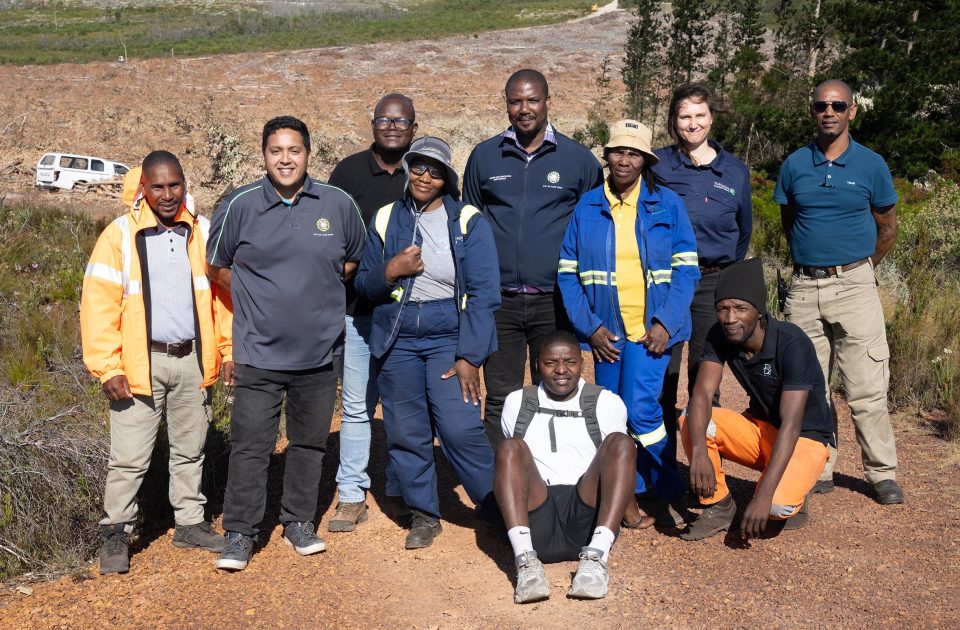
To kick off National Water Week, the City of Cape Town is highlighting the proactive clearing of water-thirsty alien invasive plants as one of its interventions to help build a water secure future for residents. Currently the City’s Water and Sanitation Directorate and the Greater Cape Town Water Fund (GCTWF) have cleared nearly 63 000 hectares of alien plant species, restoring 17,5 billion litres of water, per year, to the city’s water catchments. National Water Week starts today Thursday 20 March to Wednesday 26 March. Read more below:
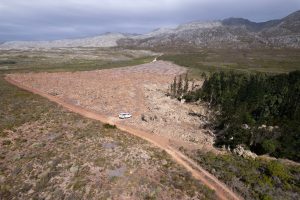
Alien invasive plants consume substantially more water than native vegetation. For this reason, clearing these non-indigenous, water-guzzling plants such as pines, gums, and wattles is part of the City’s multi-pronged New Water Programme (NWP), which aims to add an extra 300 million litres of water per day to the City’s supply by 2030.
This is a key component of the City’s Water Strategy and one of the five strategic actions of the NWP, which also includes desalination, groundwater abstraction, managed aquifer recharge and water reuse.
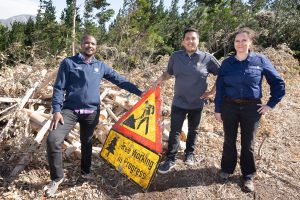
Mayoral Committee Member for Water and Sanitation, Councillor Zahid Badroodien visited the Steenbras Dam catchment along with The Nature Conservancy (TNC) to see the significant progress made in the catchment so far.
‘This critical and cost-effective clearing of invasive plant species establishes more resilient water catchments, that will continue to supply the City with water for years to come. It also provides significant social, economic and environmental benefits by creating local jobs and allowing indigenous water-wise fynbos to flourish.
‘It is worrisome to think that if this clearing doesn’t take place, the City’s water losses would double by 2045.
‘Water security is everyone’s responsibility and working together is essential to achieve our water-secure future. By supporting conservation efforts, adopting sustainable water practices and investing in nature based solutions, we can restore water supplies and build a more resilient future together,’ said Councillor Badroodien.
What to know:
· The GCTWF estimates that clearing all priority catchments can replenish the equivalent of two months of Cape Town’s water supply or fill the Wemmershoek dam (55 billion litres) each year.
· The water benefits from progress so far replenishes 48 million litres of water per day.
· Clearing is being done in the Steenbras, Theewaterskloof, Berg River and Wemmershoek Dam catchment areas as well as the Atlantis Aquifer primary recharge zone.
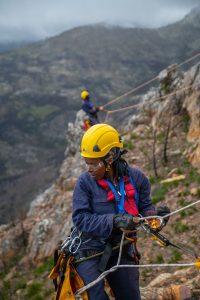
· Support from the City and partners has created 1 085 green job opportunities since 2019, of which 50% are women and 30% are youth between the ages of 18 and 25.
The City has committed R125 million towards the GCTWF over five years (2022 – 2026). This has enabled an equal investment to be leveraged from private funders, towards addressing the same challenge.
