
Cape Town’s Chess@Libraries programme brought nearly 180 young competitors together for its 2026 finals, turning public libraries into spaces for learning, confidence and community connection citywide.
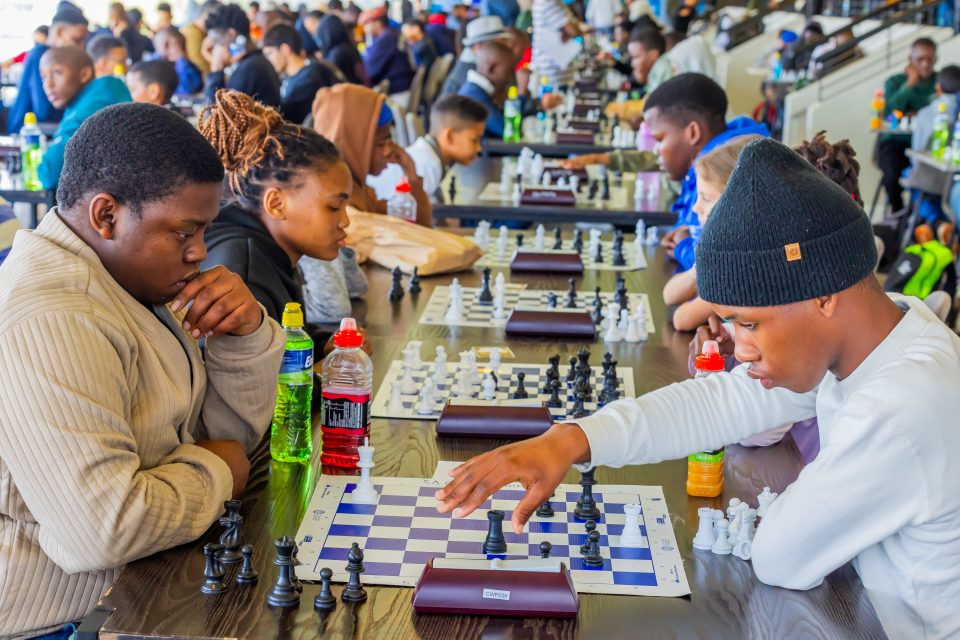
The City of Cape Town’s annual Chess@Libraries Tournament concluded at Kenilworth Racecourse on 1 October, bringing together finalists representing approximately 40 libraries from communities across the metro.
The event followed months of competitions hosted within individual libraries, with young players progressing through local rounds before earning places in the citywide final.
What began as a recreational programme has developed into a wider youth-development initiative built around the cognitive, educational and social benefits of chess.
The programme is a partnership between the City’s Library and Information Services Department, the Department of Cultural Affairs and Sport, the Cape Town Chess Federation and several organisations supporting education and youth development.
Chess provides an accessible platform through which young people can develop concentration, strategic thinking, memory, problem-solving and decision-making while participating in structured recreational activity.
City of Cape Town Mayoral Committee Member for Community Services and Health Councillor Francine Higham said the growth of the tournament demonstrates how libraries can extend their role beyond providing access to books and information.
“What began as a recreational library programme has evolved into one of the City’s most successful community development initiatives, bringing together young people from diverse communities through healthy competition and lifelong learning,” Higham said.
She said learning and playing chess can strengthen problem-solving, critical and strategic thinking and memory while allowing children to develop those abilities through an activity they enjoy.
Lutho Mfazwe from Delft Library claimed first place in the Experienced Section for players with Chess South Africa ratings.
Tezihano Mnyasta from Parow Library finished second, followed by fellow Parow Library player Prince Ngombo in third place. Imikhitha Joya from Crossroads Library received the Best Female Player award.
The Developmental Section provided an opportunity for newer and first-time players to compete, with Banele Mbatha from Cape Town Central Library taking first place and Tom Lunga from Masiphumelele Library finishing second.
For organisers and partners, however, the value of the initiative extends beyond identifying tournament winners.
Chess is increasingly being used within participating libraries as a vehicle for developing confidence, analytical thinking and perseverance while giving young people constructive spaces in which to spend time and interact with their peers.
The initiative also demonstrates how existing community infrastructure can be used differently. Cape Town’s public libraries already operate within communities across the metro, allowing programmes such as Chess@Libraries to reach young people without requiring the creation of entirely new facilities.
Participating libraries came from communities including Delft, Crossroads, Khayelitsha, Gugulethu, Langa, Du Noon, Masiphumelele, Tafelsig, Rocklands, Bellville, Parow, Woodstock, Wynberg and Cape Town Central, among many others.
The programme is now also creating pathways from chess into additional educational opportunities.
Game Changers NPC, one of the initiative’s partners alongside the St Columbus Trust and HG Transport, uses chess to help identify and develop learners showing potential in mathematics, problem-solving and STEM-related disciplines.
That connection between recreation and academic development will become particularly tangible for a group of competitors following this year’s tournament.
Through a partnership involving Game Changers NPC and the Schools Turnaround Foundation, 30 learners who participated in the 2026 city finals will receive a full year of mathematics tutoring during 2027.
Ward Councillor Emile Langenhoven, a founding member of Game Changers NPC, said this demonstrates how collaboration can turn participation in a community programme into a longer educational pathway.
“This initiative is about more than just chess, it creates a vital pathway from the game to STEM education,” Langenhoven said.
He noted that many of the young competitors represented libraries situated in under-resourced communities.
“Through our partnership with the Schools Turnaround Foundation, we are proud to provide 30 of these learners with a full year of mathematics tutoring in 2027, proving how government, civil society and the private sector can collaborate to unlock real academic opportunities for our youth,” he said.
The progression from learning chess at a neighbourhood library to competing at a city final and potentially accessing additional mathematics support illustrates the broader opportunity behind the programme.
Rather than treating the tournament as a once-off event, the partnerships surrounding Chess@Libraries are increasingly connecting recreational participation with mentorship, education and skills development.
Nearly 180 finalists gathered at Kenilworth Racecourse this year, but the programme’s wider footprint extends through the network of libraries where competitions and chess activities take place.
For young people who may not otherwise have access to organised chess clubs or formal competitions, their local library can therefore become the starting point.
The success of the 2026 tournament also reinforces the changing role public libraries can play in community development. Alongside reading and access to information, libraries can provide spaces where young people meet, compete, learn and discover abilities that may lead to opportunities elsewhere.
For Cape Town’s newest chess champions, the final marked the culmination of months of competition. For another group of participants, the next move will extend beyond the chessboard and into a year of additional mathematics learning.
In both cases, the programme demonstrates how something as simple as introducing a chessboard into a community library can become the beginning of a much larger educational opportunity.
previous post
