
Western Cape schools are strengthening reading for meaning through a province-wide literacy drive encouraging learners, teachers and communities to make reading part of everyday life.
The Western Cape Education Department is marking International Literacy Day and National Book Week through its Drop Everything And Read (DEAR) initiative, which encourages entire school communities to stop what they are doing and spend time reading.
The initiative forms part of the province’s broader Reading Strategy 2026–2030, aimed at improving literacy outcomes and ensuring learners develop the ability to read with understanding.
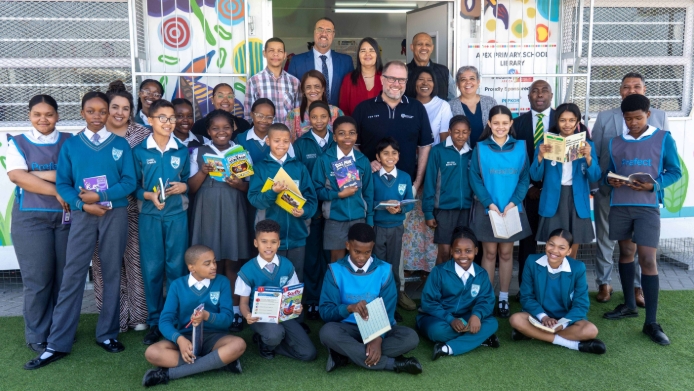
Western Cape Education Minister David Maynier joined learners and staff at Apex Primary School in Eerste River as part of the campaign, highlighting the role schools can play in building a stronger culture of reading.
DEAR provides schools with a simple intervention that can be incorporated into the school day. At a designated time, learners, teachers and other staff put aside their normal activities and read.
The approach also seeks to move reading beyond being viewed purely as a classroom exercise by creating an environment where books and reading become a regular part of school life.
The province’s literacy work extends beyond the campaign.
Through its Foundation Phase literacy intervention, the Western Cape is reaching more than 302,000 learners across approximately 1,100 schools, with support focused on strengthening teaching practices and improving learners’ ability to read for meaning.
Teachers are receiving training informed by the Science of Reading, while structured language support is being implemented across Afrikaans, English and isiXhosa classrooms.
The department says its literacy interventions are beginning to produce measurable improvements. Grade 3 Home Language performance increased by 14.3 percentage points between 2021 and 2025, while performance in the reading component improved by 16.6 percentage points over the same period.
The Reading Strategy recognises that improving literacy cannot rest with teachers alone. Schools, parents, caregivers and communities all have a role in creating opportunities for children to read regularly and develop confidence with books.
By combining teacher development, structured literacy programmes and initiatives such as DEAR, the province is working to create a reading culture that follows learners from the classroom into their homes and communities.
The long-term objective is straightforward: ensuring more children move through the education system able not only to read words, but to understand and use what they read.
