
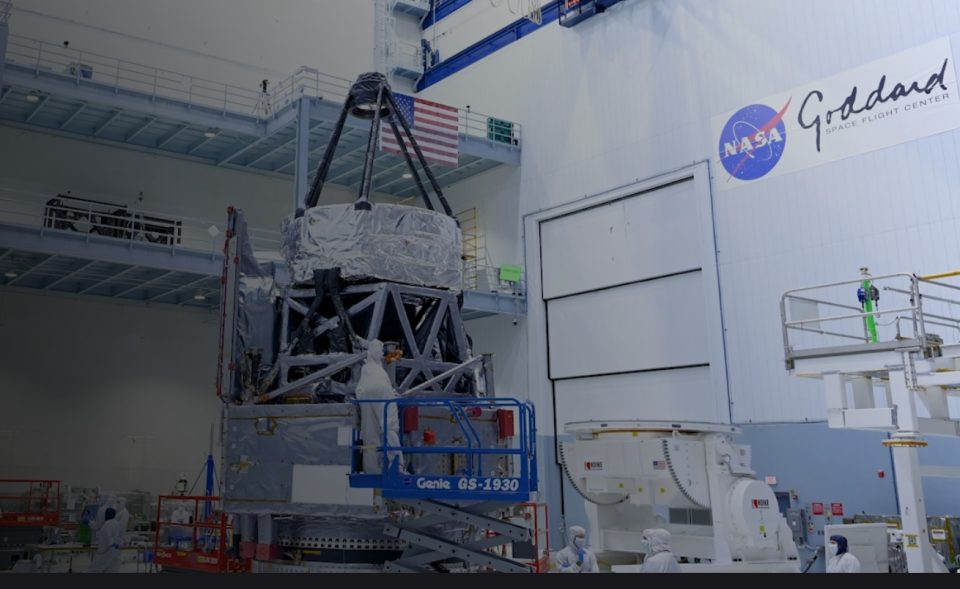
NASA’s next-generation space telescope is beginning its journey into deep space, opening a new chapter in the search to understand planets, galaxies and the universe.
The Nancy Grace Roman Space Telescope launched aboard a SpaceX Falcon Heavy rocket from NASA’s Kennedy Space Center in Florida on 30 August 2026. NASA designed the observatory to investigate some of the biggest unanswered questions in astronomy, including dark energy and dark matter.
Named after NASA’s first chief astronomer, Nancy Grace Roman, the telescope combines sharp infrared imaging with an extraordinarily wide view of space.
Roman’s field of view is at least 100 times larger than that of the Hubble Space Telescope, allowing scientists to survey vast areas of the universe while maintaining detailed imaging capabilities.
That ability could dramatically increase the amount of information astronomers can gather about the universe.
Roman will be used to map billions of galaxies and investigate how the universe has expanded over time. Scientists hope the observations will provide new evidence about dark energy, the mysterious force associated with the accelerating expansion of the universe.
The mission will also examine dark matter and study black holes while searching for planets beyond our solar system.
Exoplanets will be an important part of Roman’s work. The observatory is expected to discover and characterise planets using different techniques, helping scientists build a broader picture of planetary systems across our galaxy.
Roman will also demonstrate advanced technology through its Coronagraph Instrument, designed to block the glare from stars so scientists can study much fainter objects around them.
Following its separation from the rocket, the telescope will travel approximately one million miles from Earth to the second Sun-Earth Lagrange point, known as L2. The James Webb Space Telescope also operates in the region.
NASA has planned Roman’s primary mission for five years, with the goal of extending operations to 10 years.
Importantly for the global scientific community, NASA says Roman’s science data will be made publicly available after processing, giving researchers around the world access to information collected by the observatory.
The mission brings together scientists and organisations beyond the United States. Contributions have been made by the European Space Agency, Japan Aerospace Exploration Agency, French space agency CNES and Germany’s Max Planck Institute for Astronomy.
Roman now joins Hubble and the James Webb Space Telescope as part of humanity’s expanding ability to look deeper into space — but its unusually wide view could allow scientists to study the universe on a scale previous observatories could not.
