
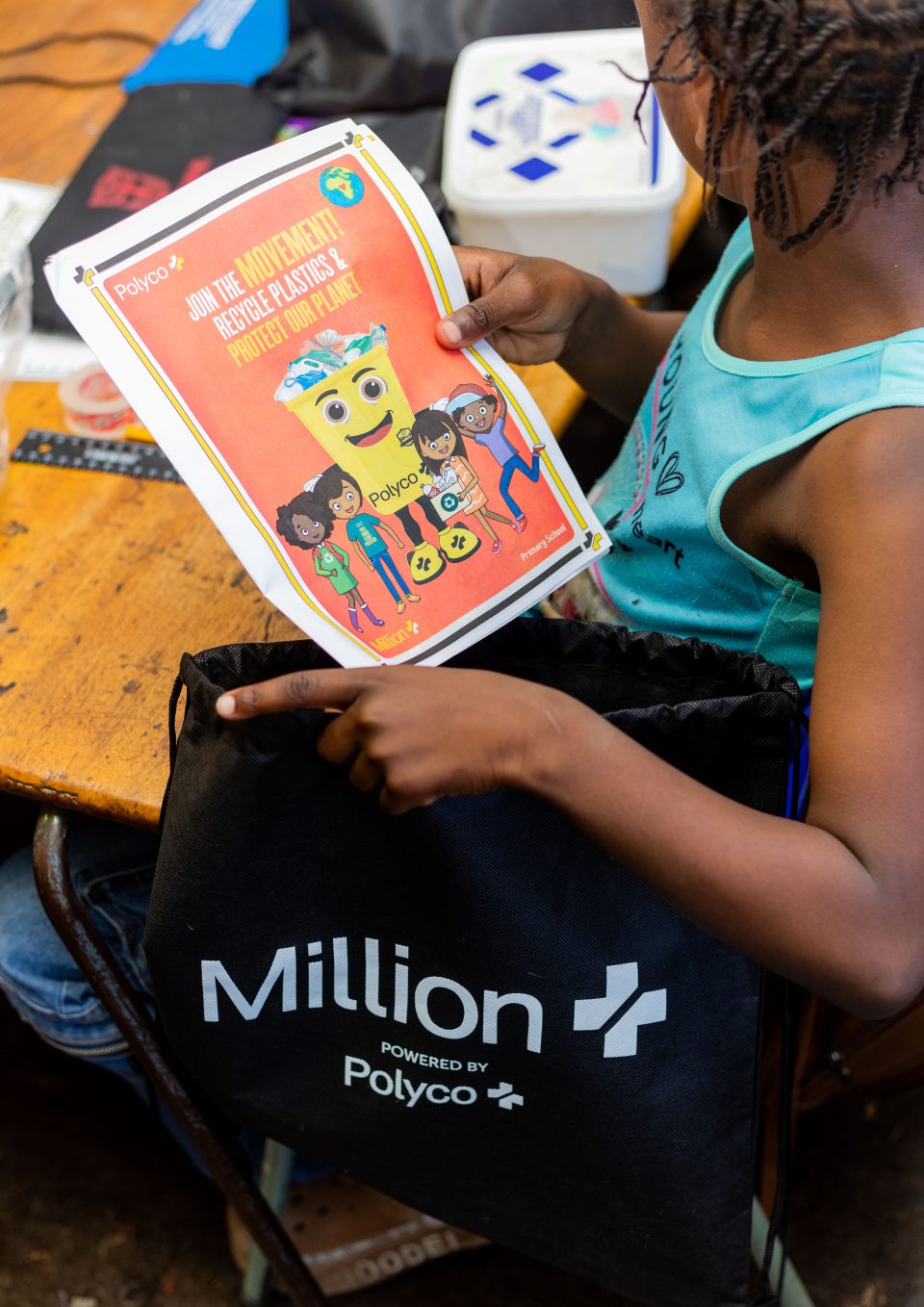
South Africa’s most important recycling decision is not happening in a boardroom, a sorting facility, or a government policy document. It is happening in a Grade 1 classroom.
Over the past decade, our national recycling conversation has matured considerably. We speak more fluently about circular economy models, extended producer responsibility, and the urgent need to reduce waste to landfill. Regulations are tightening. Businesses are investing in compliance. Sustainability reporting is gaining momentum.
Yet the missing link is still early education.
If South Africa is serious about building a resilient recycling economy, we must start at the beginning — in the classroom, and specifically in Grade 1.
Recycling Is Not Just Infrastructure… It Is Behaviour
When we talk about recycling challenges in South Africa, we tend to frame them as infrastructure problems: not enough collection points, insufficient sorting capacity, underfunded systems and unclear regulation. These are real challenges and they deserve real solutions.
But infrastructure only works when people use it consistently.
Bins do not reduce waste. People do.
And behaviour is shaped early, far earlier than most recycling strategies account for.
By the time a child enters Grade 1, daily habits are already taking form. What we do with packaging, where we discard waste and whether we separate recyclables, these patterns become normalised through repetition. If recycling is introduced at the very start of a learner’s school journey, it becomes woven into that routine rather than imposed as a correction years later.
The lesson does not feel like a rule. It feels like simply how things are done.
This is why Grade 1 matters, and why it is the entry point Polyco has chosen to invest in.
From Classroom to Household
Children are not passive recipients of education. They are agents of change, often more effective ones than adults.
When a young learner understands why plastic should not end up in a river or a landfill, that understanding does not stay inside the school gate. It travels home in a backpack.
At Polyco, we see this consistently through our school activation programmes. In 2026 alone, Polyco’s Million+ Grade 1 Recycling Education Programme is reaching 16 000 Grade 1 learners across 100 schools nationwide, building recycling knowledge and behaviours from the very start of the schooling journey.
A child who learns to separate recyclables will go home and ask why the family does not do the same. They will move items from one bin to another. They will ask questions that make adults stop and think.
One learner influences a household. One household influences a street. That ripple does not stop.
Early education not only shapes the adults of tomorrow. It changes the behaviour of communities today.
The long-term impact is generational. The short-term impact is immediate.
Education as Economic Risk Mitigation
This is where the argument becomes strategic, not just social.
Globally, biodiversity loss and environmental degradation are increasingly recognised as systemic economic risks. Supply chains are disrupted by environmental instability. Businesses face mounting regulatory pressure, rising compliance costs, and reputational exposure from poor environmental performance.
One of the most overlooked tools for mitigating these risks is behavioural education, specifically, the kind that begins early and embeds sustainability as instinct rather than instruction.
Policy alone cannot shift culture. Infrastructure alone cannot create participation. True resilience comes from a population that understands why sustainability matters and acts accordingly without needing to be told.
When recycling becomes second nature to a generation, the entire system benefits. Participation rates increase. Contamination decreases. The collection becomes more economically viable. Informal and formal recycling sectors strengthen. Circular economy ambitions move from aspiration to measurable reality.
Education is not a soft investment. It is a long-term economic strategy.
Building Environmental Stewardship from Year One
South Africa has made clear commitments to stronger recycling systems and improved environmental outcomes. Meeting those commitments will require investment, not only in physical infrastructure, but in people.
Through Polyco’s Million+ Grade 1 Recycling Education Programme, now in its third year and scaling from 25 schools in 2024, to 35 schools in 2025, to 100 schools in 2026, we are seeing what it looks like to build environmental literacy from the ground up.
This growth reflects a programme that is proving its value and expanding its national footprint year-on-year.
Learners who participate begin to understand where materials go, why separation at source matters, and how a single action connects to a much larger outcome.
Over time, this produces citizens who do not need to be persuaded to recycle. They simply do.
That shift in culture, from compliance to habit, is one of the most powerful outcomes any environmental programme can achieve.
The Missing Link
For too long, recycling efforts have focused on downstream solutions: managing waste after it has already become a problem.
Early education addresses the upstream cause. It builds the awareness, habit, and sense of personal responsibility that every downstream system depends on to function.
The missing link in South Africa’s recycling future is not a new collection route or a better sorting technology. It is a generation that grows up understanding that waste has value, that resources are finite, and that sustainability is not someone else’s responsibility.
In Grade 1 classrooms across this country, that generation is already taking shape.
The question is whether we invest in them deliberately or leave the missing link unfilled.
