
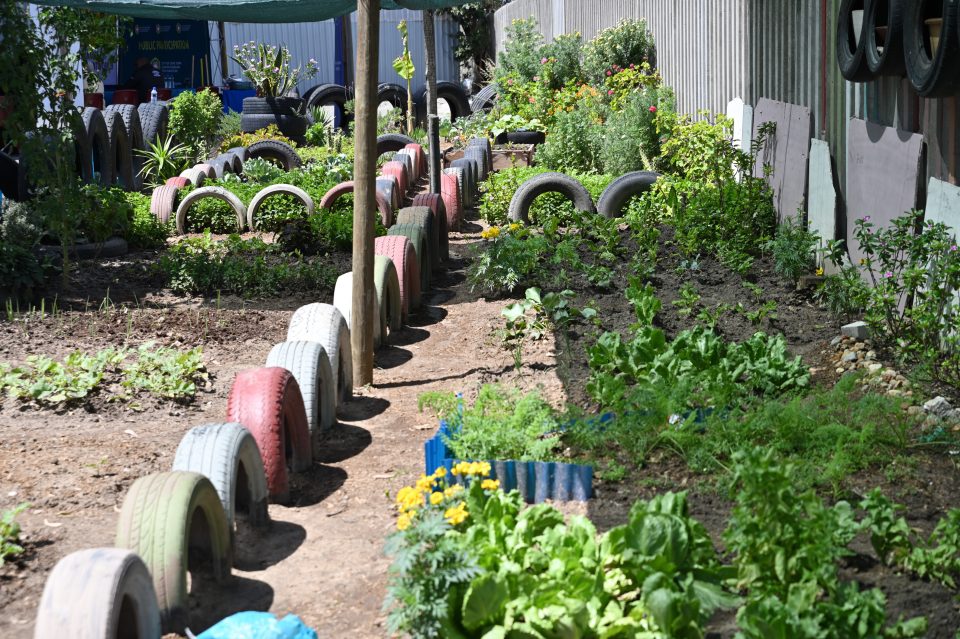
The City of Cape Town, in partnership with the Western Cape Government’s Community Development Worker (CDW) Programme, has launched a R150,000 initiative to strengthen community food security through the development of 10 food gardens in vulnerable areas across the metro.
The Food Gardens Project is part of a broader effort to combat hunger by promoting sustainable, locally driven food production while transferring agricultural knowledge to future generations. The gardens, located in communities such as Nyanga, Langa, Delft, Crossroads, Bonteheuwel, Mitchells Plain, Atlantis, and Philippi, are at varying stages of development and are expected to collectively feed thousands of residents once fully operational.
Launched at the Masithembele Food Garden in Delft, one of the city’s most active community sites, the project aims to provide each participating garden with tailored resources such as compost bins, tools, irrigation systems, seeds, and fencing to enhance productivity and security.
According to Alderman Grant Twigg, Mayoral Committee Member for Urban Waste Management, the initiative represents a shift toward community-led food resilience. “The Food Gardens Project takes a holistic, community-centred approach to nurturing a love and appreciation for food gardening,” he said. “Over time, these gardens will provide fresh, pesticide-free vegetables and meals to thousands while fostering social cohesion and agricultural skills that can sustain future generations.”
The CDW Programme, which partners with the City on this initiative, places trained development workers in communities to assess local needs and mobilise resources. Through this collaboration, each garden will serve as both a food source and a training hub for residents.
At Masithembele Food Garden, the impact is already visible. The garden supplies nutritious meals for after-school programmes and senior citizen clubs while also producing its own compost using minimal resources.
Twigg said that beyond addressing hunger, the project reinforces the City’s commitment to sustainable living. “Through food gardens, we grow more than vegetables — we grow responsibility,” he said. “Every seed planted and every meal shared symbolises hope, dignity, and a collective stand against food waste.”
As food insecurity deepens across South Africa, initiatives like this demonstrate how municipalities can empower communities to take control of their food systems, transforming idle land into productive, life-sustaining spaces.
